Phrasal Verb in Context
Tiny house hub

Big questions, tiny answers


Tiny House Hub:

tiny house - minimalism Philosophy

Learn phrasal verbs to talk about the origins of the tiny house movement

Level: Upper-Intermediate to Advanced (B2-C1)


๐ŸŒฒ Learn English While Exploring the Wild
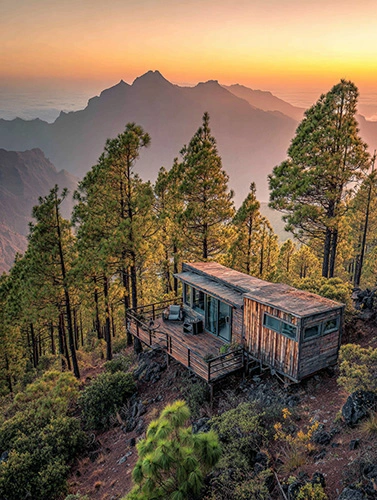
Modern tiny house parked in the wilderness, surrounded by tall pine trees, golden-hour warm sunlight, minimalist wooden architecture with large windows

The tiny house movement is now a global trend โ€” but it started in the United States. It grew out of a collision between the ideology of the American Dream and the economic crises that have hit the country harder and harder since the 1970s. The promise was simple: work hard, buy a big house, and you've made it. But as housing costs climbed and wages stayed flat, that promise began to fall apart. Some Americans started asking uncomfortable questions.

What if the dream was actually a trap? What if owning less could mean living more? This hub tells that story โ€” how a radical idea born in the U.S. turned into a worldwide conversation about housing, debt, freedom, and what we really need to live well. Of course, the West and much of the world have faced similar pressures: rising costs, financial instability, and a growing sense that the old models no longer work.

Different cultures have found different answers. But understanding the American origins helps explain why tiny houses look the way they do โ€” and why the movement speaks to so many people, in so many places, today. ๐ŸŒฟ

Multimedia Learning Hub

๐ŸŽฅ Listen, watch and practise English with immersive videos, podcasts and shadowing

๐ŸŽญ Phrasal Verbs Video Practice

English Story Video for Phrasal Verbs Practice
๐ŸŒŸ Explore All Themes
Discover story-based lessons, videos and interactive practice

๐ŸŽ™๏ธ Story Podcast for Phrasal Verbs

Story Podcast for English Communication
๐ŸŽฏ Open the Phrasal Verbs Dictionary
Review advanced phrasal verbs with examples, meaning and practice
๐Ÿ†

Your Progress

0
Correct
0
Incorrect
0%
Accuracy
0
Score
00:00
Study Time

๐Ÿ”Š Listen & Practice This Card โ€” The Birth of National Parks Practice shadowing: read while listening and repeat. Then write down a few expressions or sentences that stood out to you.
Speed:
0:00 / 0:00
Ready to play

๐ŸŒฒ Looking Back at Thoreau's Walden

In 1845, a 27-year-old writer named Henry David Thoreau walked into the woods near Concord, Massachusetts, and built himself a tiny cabin by Walden Pond. He wanted to figure out what really mattered in lifeโ€”and what was just noise. For two years, he lived on almost nothing: a small garden, simple meals, hours of reading and writing. No rent. No boss.

No rush. His experiment went on to inspire generations of Americans who felt crushed by the demands of work and money. Thoreau wrote that possessions slow us down, that society pushes us into lives we never actually chose. His advice was radical and simple: strip away everything unnecessary, wake up to your real needs, and start living deliberately. Stop chasing what the world tells you to want.

Over a century later, tiny house supporters still bring up Thoreau when explaining their choices. They carry on his criticism of materialism and his belief in self-reliance. Yes, Thoreau eventually went back to townโ€”he never claimed the woods were for everyone. But his questions have never gone away: What do we actually need? What are we afraid to let go of?

And what kind of life could we build if we finally did?

๐Ÿ”Š Listen & Practice This Card โ€” rotecting Biodiversity Practice shadowing: read while listening and repeat. Then write down a few expressions or sentences that stood out to you.
Speed:
0:00 / 0:00
Ready to play

โœŒ๏ธ Taking On the Back-to-Land Movement

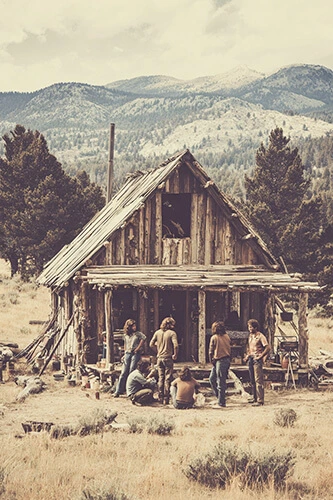
In the late 1960s, thousands of young Americans got fed up and walked away from everything. The Vietnam War was on TV every night. Corporate jobs felt meaningless. The suburbs their parents loved looked like prisons. So they packed up and headed to the countryside โ€” to Vermont, New Mexico, Northern California โ€” dreaming of a different kind of life.

They had enthusiasm, a little cash, and almost no skills. But they figured it out as they went along. They built cabins from salvaged wood, learned to grow food, lived without electricity or running water. A book called "The Whole Earth Catalog" came out in 1968 and became their bible โ€” a DIY guide for people who wanted to break away from consumer culture and start over from scratch. Communes popped up everywhere, built on ideas of cooperation, sustainability, and freedom.

Most of those communes eventually broke up. People got tired, ran out of money, or just missed hot showers. Many went back to conventional lives. But the movement didn't disappear โ€” it left seeds. Ideas about sustainable building, simple living, and doing things yourself quietly mixed into American culture.

A generation of kids grew up hearing these stories around the dinner table. They absorbed certain values: distrust of debt, love of craftsmanship, and a stubborn belief that you don't have to live the way everyone else does.

A group of young adults in the late 1960s building a rustic wooden cabin from salvaged wood in a rural American landscape, surrounded by trees and mountains, cooperative DIY energy, bohemian style
๐Ÿ”Š Listen & Practice This Card โ€” Indigenous Peoples and National Parks Practice shadowing: read while listening and repeat. Then write down a few expressions or sentences that stood out to you.
Speed:
0:00 / 0:00
Ready to play

๐ŸŽฌ Catching On to Japanese Minimalism

A quiet Japanese residential street with narrow sidewalks, small minimalist houses, clean lines, muted colors, overhead power lines, soft natural daylight, calm peaceful atmosphere

In the 1980s and 1990s, something unexpected started showing up in American design magazines: empty rooms. Japanese aesthetics were making their way into Western culture, and they carried a radical message. Beauty wasn't about filling every corner โ€” it was about what you chose to leave out. Clean lines. Bare walls.

Space to breathe. Books about Japanese homes revealed a different philosophy. Small didn't have to mean cramped. A well-designed compact space could feel peaceful, even luxurious. Sliding doors opened or closed rooms as needed.

Every inch had a purpose. Western designers caught on and started applying these ideas to projects that challenged the American assumption that bigger always meant better. For people already questioning suburban excess, Japanese minimalism offered a whole new vocabulary. Then came Marie Kondo. When her tidying method took off in the 2010s, it brought Japanese minimalism straight into American living rooms.

Her question โ€” "Does this spark joy?" โ€” gave people permission to let go of things they'd been holding onto for years. Suddenly, getting rid of stuff felt like freedom, not loss. The connection to tiny house living was obvious: if you can live happily with less, why pay for space you don't need? This cultural exchange helped Americans see something clearly: most of their housing excess wasn't real need. It was just habit.

๐Ÿ”Š Listen & Practice This Card โ€” Popular Activities in National Parks Practice shadowing: read while listening and repeat. Then write down a few expressions or sentences that stood out to you.
Speed:
0:00 / 0:00
Ready to play

๐ŸŽฏ Conclusion: Old Ideas, New Urgency

The tiny house movement didn't just pop up out of nowhere. It grew from seeds planted over generations โ€” by a philosopher in the woods, by idealists in handmade communes, by designers who saw beauty in empty space. Each wave filled the gap left by the last: Thoreau helped us figure out the questions, the counterculture walked us through the courage to experiment, and Japanese minimalism backed up a new way of seeing. What ties them all together is a single, stubborn insight: more stuff doesn't mean more life. Every generation that embraced this idea ran into resistance โ€” from family, from neighbors, from a culture built on buying and expanding.

They had to cut out the noise and wake up to what really mattered. And every generation dealt with the pushback and passed the insight on anyway. Today, when young people choose tiny houses, they're not just solving a housing problem. They're picking up a thread that runs back almost two centuries. They build up something new while honoring old wisdom.

They refuse to let consumerism wipe out what matters. They check in on each other and help out their communities. They're saying what Thoreau said, what the commune builders said, what Marie Kondo said in her own way: we don't need everything we've been told to want. And once you see that clearly, you can finally start building something that fits who you actually are.

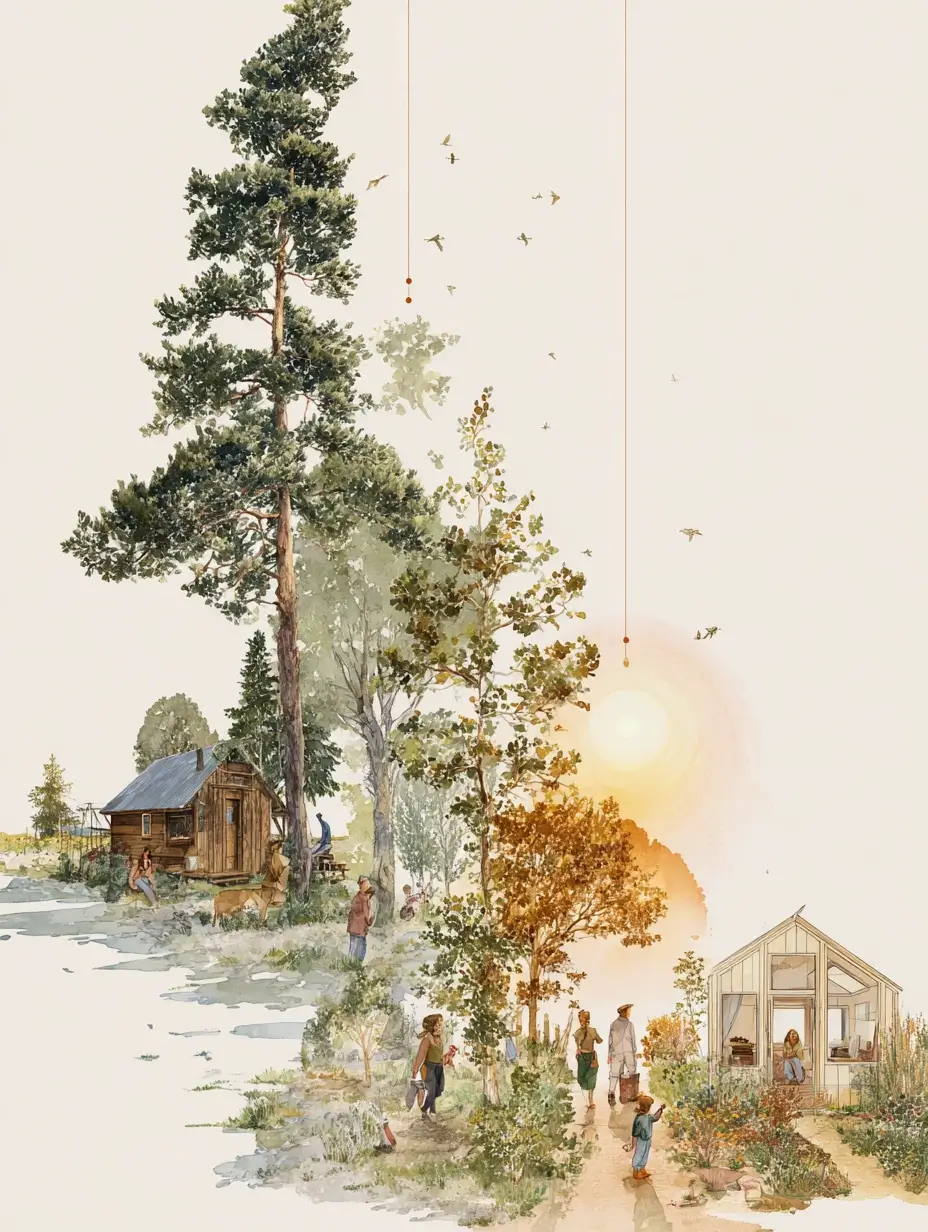
A poetic educational illustration about the history of simple living and the tiny house movement, showing a cabin in the woods, a 1960s commune, and a modern tiny house connected by a glowing thread of light
Match the Tiny Houses Philosophy Phrasal Verbs
0/16

Click one item in Column A and its meaning in Column B. Complete all pairs.

Column A โ€“ Phrasal Verbs

Column B โ€“ Meanings

๐Ÿ‘ฅ

Join Our Community!

Study the phrasal verbs on this page and then join our community with suggestions, comments, and learning

f Join the Community
0%
Scroll to Top