Phrasal Verb in Context
Tiny house hub

Big questions, tiny answers


Tiny House Hub:

Economic Roots os the Tiny House

Learn phrasal verbs to talk about the origins of the tiny house movement

Level: Upper-Intermediate to Advanced (B2-C1)


๐ŸŒฒ Learn English While Exploring the Wild
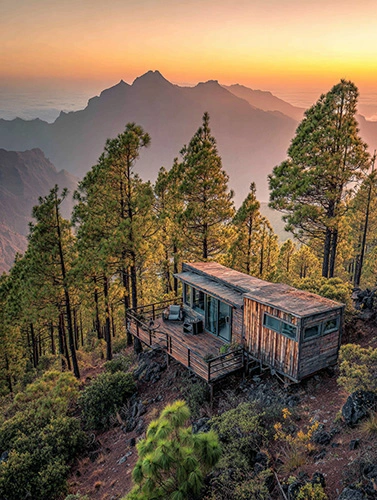
Modern tiny house parked in the wilderness, surrounded by tall pine trees, golden-hour warm sunlight, minimalist wooden architecture with large windows

The tiny house movement is now a global trend โ€” but it started in the United States. It grew out of a collision between the ideology of the American Dream and the economic crises that have hit the country harder and harder since the 1970s. The promise was simple: work hard, buy a big house, and you've made it. But as housing costs climbed and wages stayed flat, that promise began to fall apart. Some Americans started asking uncomfortable questions.

What if the dream was actually a trap? What if owning less could mean living more? This hub tells that story โ€” how a radical idea born in the U.S. turned into a worldwide conversation about housing, debt, freedom, and what we really need to live well. Of course, the West and much of the world have faced similar pressures: rising costs, financial instability, and a growing sense that the old models no longer work.

Different cultures have found different answers. But understanding the American origins helps explain why tiny houses look the way they do โ€” and why the movement speaks to so many people, in so many places, today. ๐ŸŒฟ

Multimedia Learning Hub

๐ŸŽฅ Listen, watch and practise English with immersive videos, podcasts and shadowing

๐ŸŽญ Phrasal Verbs Video Practice

English Story Video for Phrasal Verbs Practice
๐ŸŒŸ Explore All Themes
Discover story-based lessons, videos and interactive practice

๐ŸŽ™๏ธ Story Podcast for Phrasal Verbs

Story Podcast for English Communication
๐ŸŽฏ Open the Phrasal Verbs Dictionary
Review advanced phrasal verbs with examples, meaning and practice
๐Ÿ†

Your Progress

0
Correct
0
Incorrect
0%
Accuracy
0
Score
00:00
Study Time

๐Ÿ”Š Listen & Practice This Card โ€” What Are National Practice shadowing: read while listening and repeat. Then write down a few expressions or sentences that stood out to you.
Speed:
0:00 / 0:00
Ready to play

๐ŸŒฒ Breaking Away from Post-War Consumerism

Evolution of American housing ideals from 1950s suburbs through 1970s simplification to post-2008 tiny houses

After World War II, Americans bought into a powerful idea: the bigger your home, the better your life. Suburbs exploded across the country. Families took on massive mortgages just to keep up with the neighbors. Real estate companies rolled out glossy ads showing smiling families in front of enormous housesโ€”and millions signed up for decades of debt without thinking twice. Then came the 1970s, and cracks started to show.

A few brave voices spoke out against the madness. Why work sixty hours a week just to pay for rooms you never use? These early rebels cut back on their possessions and set out to prove a radical point: happiness has nothing to do with square footage. They turned away from corporate careers and started searching for something lighter, freer. But the real turning point came in 2008.

The housing market collapsed. Prices had gone up so fast that an entire generation found themselves locked out completely. Young people watched their parents lose homes to foreclosureโ€”and decided they wanted no part of that game. They began to look into alternatives that could let them break free from endless debt. Suddenly, the tiny house idea didn't seem crazy anymore.

It seemed like the only thing that made sense.

๐Ÿ”Š Listen & Practice This Card โ€” The Birth of National Parks Practice shadowing: read while listening and repeat. Then write down a few expressions or sentences that stood out to you.
Speed:
0:00 / 0:00
Ready to play

๐ŸŒฒ Dealing With the 2008 Financial Collapse

The 2008 crash didn't just hurt the economyโ€”it shattered a belief. For decades, Americans had counted on real estate as the safest investment around. Then the market fell apart. Millions of families ended up losing their homes. Entire neighborhoods were torn apart by foreclosures.

"For Sale" signs lined streets that had been full of life just months before. This disaster gave rise to a question nobody wanted to ask: Was the American Dream actually a trap? Young adults who watched their parents struggle through bankruptcy began to back away from traditional mortgages. Why repeat the same mistake? They set about finding new paths to homeownershipโ€”ones that wouldn't weigh them down with thirty years of debt.

The tiny house movement stood out as the smartest answer: own your home, keep your freedom. And people got creative. Some put aside a few thousand dollars and built small homes entirely with cash. No banks. No interest.

No fear of losing everything. This approach did away with the old rules and opened up real possibilities for people who couldn't qualify for traditional loans. The crisis had stirred up something unexpected: a quiet revolution in how Americans thought about what a home should be.

Full-body bull statue in front of the Amsterdam Stock Exchange facade, financial world atmosphere
๐Ÿ”Š Listen & Practice This Card โ€” The Birth of National Parks Practice shadowing: read while listening and repeat. Then write down a few expressions or sentences that stood out to you.
Speed:
0:00 / 0:00
Ready to play

๐ŸŒฒ Pushing Back Against Unaffordable Housing

A cheerful morning news interview outside a small tiny house on a sunny street corner, friendly energy, lifestyle television mood

By the 2010s, housing in major cities had gone completely out of control. In San Francisco, Austin, and New York, tech money and real estate investors drove up prices so fast that middle-class families couldn't keep up. Young professionals faced a brutal truth: they might work in these cities forever but never actually afford to live there. Rents climbed every single year. Buying a home?

For many, it seemed like a joke. But instead of giving up, creative people came forward with ideas. They looked back at old-school dwellingsโ€”yurts, cabins, converted trailersโ€”and worked out modern versions that could fit in backyards or empty lots. These pioneers stood up to city officials and fought against zoning laws written decades ago for a world that no longer existed. It wasn't easy.

They faced fines, legal battles, and neighbors who didn't want "those little shacks" nearby. Still, the movement kept growing. More people took up tiny house living, and supporters reached out to lawmakers with a simple argument: these outdated rules are holding back real solutions. Slowly, cities started to come around. Officials realized that tiny houses could actually help with housing shortagesโ€”not replace traditional homes, but offer one more option.

What had started as protest was turning into policy.

๐Ÿ”Š Listen & Practice This Card โ€” Conclusion: The Future of National Parks Practice shadowing: read while listening and repeat. Then write down a few expressions or sentences that stood out to you.
Speed:
0:00 / 0:00
Ready to play

๐ŸŽฌ Conclusion: From Radical Idea to Global Movement

The tiny house movement wasn't born from a trend โ€” it was born from necessity. When the American Dream of homeownership fell apart in 2008, a generation woke up to an uncomfortable truth: the system their parents had counted on no longer worked for them. But instead of giving up, people pushed back. They put aside small savings and built homes with their own hands. They stood up to outdated regulations and reached out to lawmakers who would listen.

They turned away from thirty-year mortgages and set out to prove that freedom doesn't require a massive house โ€” just a roof you actually own. What started as a reaction to crisis has turned into something bigger: a quiet rebellion against the idea that more debt equals more happiness. And as cities slowly come around to new housing solutions, the tiny house movement keeps growing โ€” one small home at a time.

Tiny Houses Phrasal Verbs Exercise - Block 1

Click on the blanks to choose the correct phrasal verb

Question 1:
By the 2010s, tech money _________ housing prices, and middle-class families couldn't _________.
Question 2:
Outdated rules were _________ real solutions, but slowly cities started to _________.
Question 3:
Pioneers _________ city officials and _________ modern versions of yurts and cabins.
Question 4:
In the 1970s, rebels _________ their possessions and _________ to prove that happiness has nothing to do with square footage.
Question 5:
The disaster _________ serious questions about the American Dream, and young adults began to _________ traditional mortgages.
Question 6:
After World War II, Americans _________ the idea that bigger homes meant better lives, and families _________ huge mortgages to compete with neighbors.
Question 7:
When the 2008 market _________, millions of families _________ losing their homes to foreclosure.
Score: 0/7 questions correct (0%)

Don't Learn Alone!

Join our English Learning Community on Facebook where students and teachers discuss lessons, share progress, and practice together. Turn your learning into a permanent habit!

๐Ÿ’ฌ Join Our Community

โœ“ Daily practice tips ยท โœ“ Live discussions ยท โœ“ Support from fellow learners

0%
Scroll to Top