Phrasal Verbs • Level A2-B1

The Global Village

Phrasal Verbs Through the Social Media Revolution

Human Communication Theme

Master Phrasal Verbs Through the Age of Connection

1

The World in Your Pocket

Learn phrasal verbs from Smartphone history

Start Learning
2

The World Becomes a Web

Learn phrasal verbs Through the Age of Connection

Start Learning
3

The Global Village

Learn phrasal verbs from Computers Hitory

You are here

Multimedia Learning Hub

🎥 Listen, watch and practise English with immersive videos, podcasts and shadowing

🎭 Phrasal Verbs Video Practice

English Story Video for Phrasal Verbs Practice
🌟 Explore All Themes
Discover story-based lessons, videos and interactive practice

🎙️ Story Podcast for Phrasal Verbs

Story Podcast for English Communication
🎯 Open the Phrasal Verbs Dictionary
Review advanced phrasal verbs with examples, meaning and practice
🏆

Your Progress

0
Correct
0
Incorrect
0%
Accuracy
0
Score
00:00
Study Time

🔊 Listen & Practice This Card — When Silence Learned to Speak Practice shadowing: read while listening and repeat. Then write down a few expressions or sentences that stood out to you.
Speed:
0:00 / 0:00
Ready to play
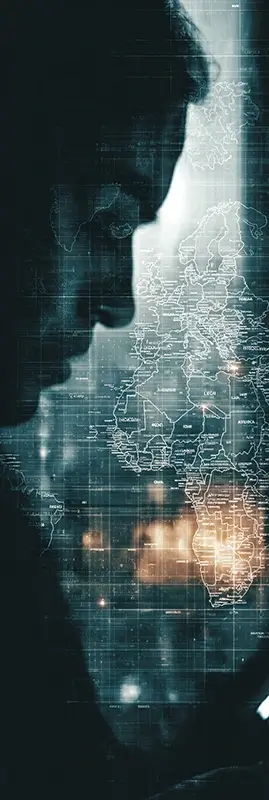
a person at night illuminated only by a smartphone screen, the reflection of a world map and news from different continents visible on the screen
CARD 1

McLuhan & The Global Village Idea

In the 1960s, a Canadian professor named Marshall McLuhan came up with a powerful idea. He figured out that electronic media — radio, television, and telephone — were bringing people closer together. He pointed out that the world was turning into something completely new: a global village. His vision stood out at a time when the internet did not even exist yet.

McLuhan believed that the medium itself carried meaning — not just the message. He thought that new technologies were breaking down the barriers between countries and cultures. People were starting to find out about events on the other side of the world in just a few hours. The old world of separate nations was beginning to fall apart, and a new connected world was starting to take shape.

Many people at the time did not take in his ideas easily — his writing was complex, and readers had to go over his texts many times. But over the decades, his vision caught on around the world. Today, when we scroll through news from every continent on our phones, we can see that McLuhan was right all along.
🔊 Listen & Practice This Card — Buying, Selling and the Speed of Electricity Practice shadowing: read while listening and repeat. Then write down a few expressions or sentences that stood out to you.
Speed:
0:00 / 0:00
Ready to play
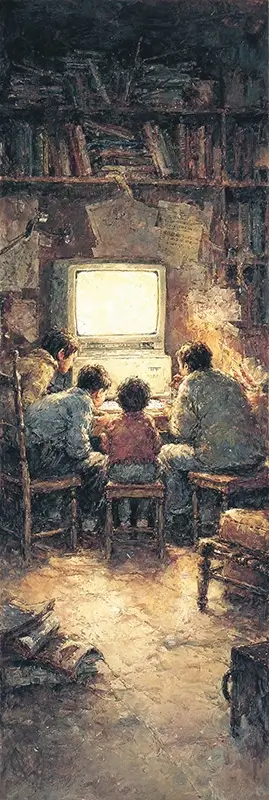
a family gathered around a bulky desktop computer in a cozy living room
CARD 2

The World Wide Web

In 1989, a British scientist named Tim Berners-Lee came up with a plan to connect all computers around the world. He wanted to set up a system where people could share information freely and easily. By 1991, the World Wide Web was up and running. Nobody could have imagined how quickly this invention would catch on across the planet.

In the early days, only universities and research centers could log on to the internet. But soon, ordinary people began to sign up for internet access at home. Websites started to pop up everywhere — for news, shopping, and education. The web was opening up a whole new world of possibilities for millions of people.

By the late 1990s, the internet was growing so fast that it was hard to keep up with all the changes. New companies were setting up online stores and services almost every day. People were starting to look up information on the web instead of going to libraries. The world was speeding up, and McLuhan's global village was finally coming true.

🔊 Listen & Practice This Card — War, Power and the Politics of the Wire Practice shadowing: read while listening and repeat. Then write down a few expressions or sentences that stood out to you.
Speed:
0:00 / 0:00
Ready to play
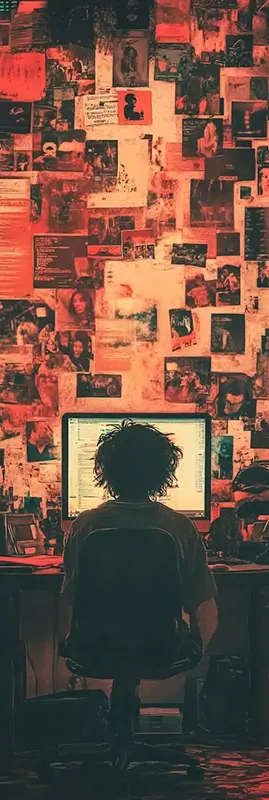
a teenager sitting at a desktop computer in a bedroom filled with soft nostalgic details
CARD 3

The Social Media Revolution

In the early 2000s, a new kind of website began to show up on the internet: social media. Platforms like MySpace and Friendster let users sign up and connect with friends online. Then Facebook came along in 2004 and everything changed. Millions of people started to log in every day to share photos, news, and personal updates.

YouTube launched in 2005, and suddenly anyone could put out videos for the whole world to see. Twitter let people speak up about anything in just 140 characters. Ordinary citizens could now put forward their own stories without going through traditional media. The power to share information had spread out to everyone.

Social media brought people together in ways that were hard to imagine before. Activists could call on supporters from different countries to stand up for the same cause. Information could go viral and reach out to millions of people in just a few hours. The Arab Spring of 2011 showed the world how communities could rise up and demand change through social networks.

🔊 Listen & Practice This Card — The Cable That Tied Two Worlds Together Practice shadowing: read while listening and repeat. Then write down a few expressions or sentences that stood out to you.
Speed:
0:00 / 0:00
Ready to play
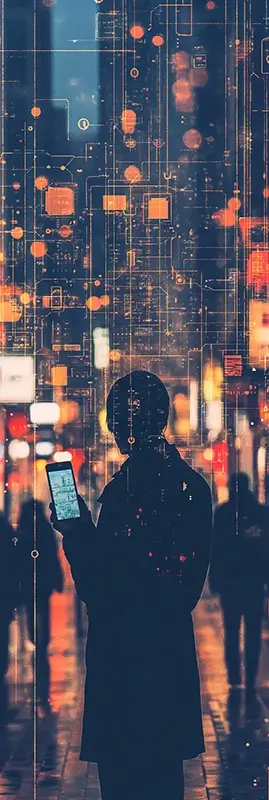
a person standing in a city street at dusk holding a smartphone in their hand, the screen glowing softly and subtly reflecting maps, messages, web pages and digital icons
CARD 4

Smartphones & The Real-Time World

When Apple launched the iPhone in 2007, the world started to change in ways nobody had fully planned for. Suddenly, people could carry out tasks that once required a computer, using only a small device in their pocket. They could log on to the internet and look up information anywhere, at any time. The global village was no longer just at home — it was everywhere.

Smartphones also changed the way news spread out. When something important happened, people on the scene could pull out their phones and start filming immediately. Videos of protests or disasters would show up online within minutes. Journalists had to keep up with ordinary citizens who were breaking news live from the streets, and the old way of reporting was starting to break down.

Apps like WhatsApp and Instagram made it easier to stay in touch with people far away. Families spread out across different countries could catch up with each other every day through video calls. New friendships could grow out of shared interests, crossing borders and time zones. The smartphone had turned McLuhan's dream into everyday reality.

🔊 Listen & Practice This Card — The Wire That the World Built On Practice shadowing: read while listening and repeat. Then write down a few expressions or sentences that stood out to you.
Speed:
0:00 / 0:00
Ready to play
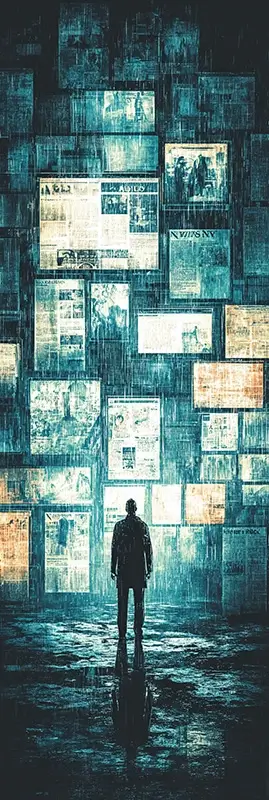
a person standing in front of multiple glowing floating screens in a dark modern space, some screens showing trustworthy news and others distorted, fragmented or misleading information
CARD 5

One Village, Many Voices

The global village brought people together, but it also raised new questions. As more voices started to speak out online, it became harder to tell true information from false. Misinformation could spread out across the world faster than the truth. Societies had to figure out how to face this challenge without shutting down free speech.

Social media platforms also created what experts call "echo chambers." When people only follow accounts that agree with them, they end up cut off from different perspectives. Algorithms pick out content that matches what users already believe, making it hard to come across new or challenging ideas. Instead of one open village, the internet sometimes looks more like many separate bubbles.

But the global village also gives us reasons to hope. People can still reach out to others across the world and build real connections. Young activists can team up with supporters from many countries to stand up for human rights and the environment. We can choose to speak up for understanding instead of division. The global village is what we make of it — and it is still worth fighting for.

🌐 Global Village Quiz
Read carefully and choose the best answer
Question 1/10
Score: 0/10
What does 'come up with' mean in: 'Marshall McLuhan came up with a powerful idea in the 1960s'?
0/10
Well done!
Alessandra Fernandes Nóbrega
History teacher and educational content creator. M.A. in History of Education (UFPB). Creator of WeeklyCross, FlipVerbs and Flowglish — a connected ecosystem for learning English through context, not memorisation. Trained in educational entrepreneurship in Finland.

WeeklyCross teaches phrasal verbs through historical and cultural context. Each lesson connects to vocabulary practice on FlipVerbs and fluency levels on Flowglish — forming a complete learning ecosystem.

0%
Scroll to Top