WORDS IN THE WIND

Phrasal Verbs • Level A2-B1

Master phrasal verbs through long-distance communication evolution

Human Communication Theme

Learn phrasal verbs through different periods of communication history

1

BRIDGING THE DISTANCE

Learn phrasal verbs from talking drums to Smoke & Fire

Start Learning
2

WORDS IN THE WIND

Master phrasal verbs through long-distance communication evolution

You are here
3

Words Multiplied

Monks, Machines and the Birth of Mass Communication

Start Learning

Multimedia Learning Hub

🎥 Listen, watch and practise English with immersive videos, podcasts and shadowing

🎭 Phrasal Verbs Video Practice

English Story Video for Phrasal Verbs Practice
🌟 Explore All Themes
Discover story-based lessons, videos and interactive practice

🎙️ Story Podcast for Phrasal Verbs

Story Podcast for English Communication
🎯 Open the Phrasal Verbs Dictionary
Review advanced phrasal verbs with examples, meaning and practice
🏆

Your Progress

0
Correct
0
Incorrect
0%
Accuracy
0
Score
00:00
Study Time

🔊 Listen & Practice This Card — https://weeklycross.com/wp-content/uploads/2026/04/The-Long-History-of-Human-Communication-Sarah.mp3 Practice shadowing: read while listening and repeat. Then write down a few expressions or sentences that stood out to you.
Speed:
0:00 / 0:00
Ready to play
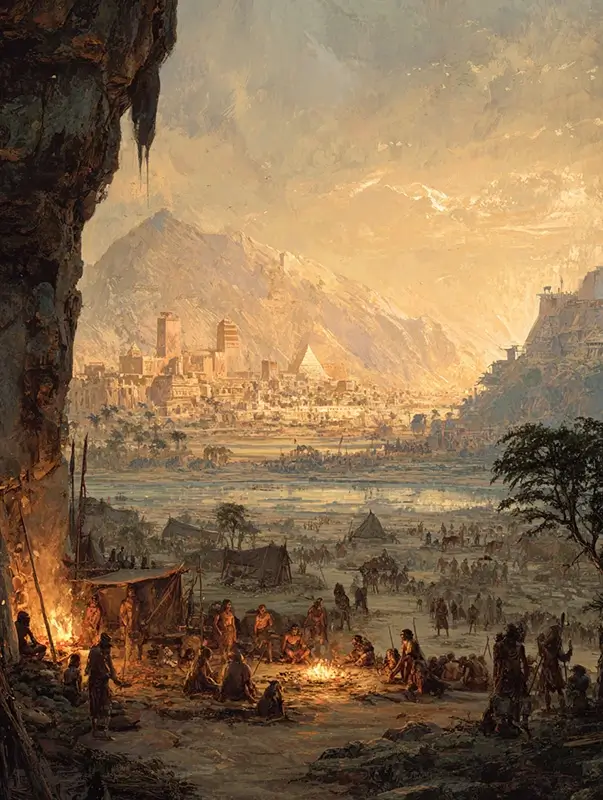
A scene showing the evolution of human communication across time. In the foreground, ancient humans gathered around a fire, sharing stories and knowledge. In the middle ground, early civilizations writing on stone tablets and scrolls. In the background, vast empires connected by messengers and horseback postal networks crossing deserts and mountains.
INTRO

The Long History of Human Communication

Human beings have always needed to reach out to one another across distances. But how did they figure out ways to do this long before technology came along? The answer lies deep in our nature — the desire to pass on knowledge and connect with others is one of the most fundamental forces in all of human history.

When civilizations began to grow up and spread out across vast territories, communication became a matter of survival. How could leaders keep up with events happening far away? How could merchants carry out transactions with partners in distant lands? These urgent questions pushed societies to come up with increasingly sophisticated methods of exchanging information.

And what were these methods? This hub will take you through some of the most fascinating milestones in communication history. From the first writing systems that set off a revolution in how knowledge was recorded, to the remarkable postal networks that grew out of ancient empires — each innovation built on what came before. Are you ready? Let's set out on this journey through time together!
🔊 Listen & Practice This Card — The First Writing Systems Practice shadowing: read while listening and repeat. Then write down a few expressions or sentences that stood out to you.
Speed:
0:00 / 0:00
Ready to play
Card image
CARD 2

The First Writing Systems

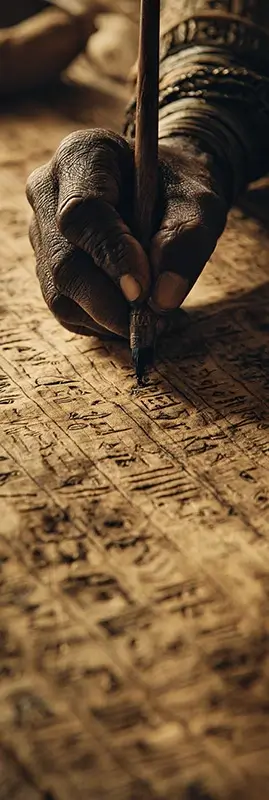
How did human beings first figure out how to write down their thoughts? The story goes back more than 5,000 years, to the ancient civilizations of Mesopotamia and Egypt. For centuries, people had relied on oral tradition to hand down knowledge — but spoken words could be forgotten or distorted. Something had to change, and the Sumerians came up with a revolutionary solution: symbols pressed into clay tablets.

But how did these early symbols grow into a full writing system? It all grew out of simple pictograms used to keep track of goods and trade. Over centuries, scribes built up a complex system of hundreds of symbols that could stand for sounds, words, and concepts. As writing spread out across the ancient world, it took on new forms — the Egyptians came up with hieroglyphics, while the Phoenicians worked out an alphabet that would eventually give rise to most modern writing systems.

And what did writing actually change? Everything. Civilizations could now carry out governance on a massive scale and hold on to collective memory like never before. Kings could put out laws that went beyond what any messenger could reliably remember. Scholars could write down observations and pass them on to future generations. Writing didn't just stand for communication — it made up the very foundation of organized society.

🔊 Listen & Practice This Card — The Persian Postal System Practice shadowing: read while listening and repeat. Then write down a few expressions or sentences that stood out to you.
Speed:
0:00 / 0:00
Ready to play
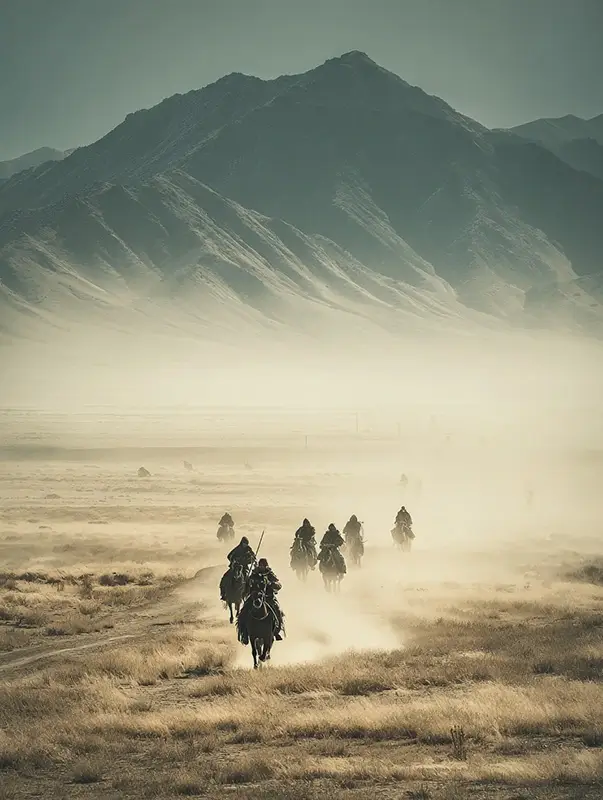
ancient Persian Empire during the time of Cyrus the Great and Darius the Great. A fast horse-mounted courier rides across vast landscapes, from deserts to mountains, carrying an important message.
CARD 2

The Persian Postal System

How do you keep up with events across an empire stretching from Egypt to India? That was exactly the challenge King Cyrus the Great had to work out around 550 BCE. As his empire spread out across vast territories, fast and reliable communication became critical. His successors, particularly Darius the Great, took over and built up what historians now call the Chapar Khaneh — one of the most impressive postal networks the ancient world had ever seen.

But how did this system actually work out in practice? It relied on a chain of relay stations set up at regular intervals along major roads. Mounted couriers would set off from one station, ride at full speed, and then hand over their messages to a fresh rider at the next post. Could urgent news really get through thousands of miles in just a few days? Absolutely — because officials kept up supplies of fresh horses at every station, ensuring the network never broke down.

What made the Persian system truly stand out? It didn't just carry out military communications — it also took on diplomatic and commercial messages. The Greek historian Herodotus was so impressed that he wrote down words that would later come to inspire the United States Postal Service motto. By putting together infrastructure, organization, and relay logistics, the Persians came up with a model that empires for centuries would look back on and build on.

🔊 Listen & Practice This Card — Carrier Pigeons in the Middle Ages Practice shadowing: read while listening and repeat. Then write down a few expressions or sentences that stood out to you.
Speed:
0:00 / 0:00
Ready to play
Card image
CARD 4

Carrier Pigeons in the Middle Ages

When the Roman Empire fell apart and its great postal roads broke down, medieval societies faced a serious problem — how could they get messages across hundreds of miles quickly and reliably? What solution did they come up with? The answer was flying overhead all along. People turned to the humble pigeon, a bird with an extraordinary ability to find its way back home over vast distances. And during the Middle Ages, the use of carrier pigeons in communication truly took off.

How exactly did you train a pigeon to carry out a mission? Handlers would bring up young birds in a specific loft, allowing them to grow up in a place they would always come back to. When a message needed to get through, the pigeon was taken to a distant location and let go with a small note attached to its leg. It would set off immediately, heading back home at remarkable speed. Military commanders relied on this system to keep up with battlefield developments and pass on urgent orders — sometimes turning the tide of a battle.

But who stood out as the true masters of this art? The Arab world built up the most sophisticated pigeon post networks of the medieval period, linking up major cities from Cairo to Baghdad. During the Crusades, both Christian and Muslim forces made use of pigeons to carry out secret communications. Did these birds ever let their commanders down? Rarely — they turned out to be so reliable that some leaders fully trusted in their feathered messengers to come through when it mattered most.

🔊 Listen & Practice This Card — Communication: A Never-Ending Journey Practice shadowing: read while listening and repeat. Then write down a few expressions or sentences that stood out to you.
Speed:
0:00 / 0:00
Ready to play
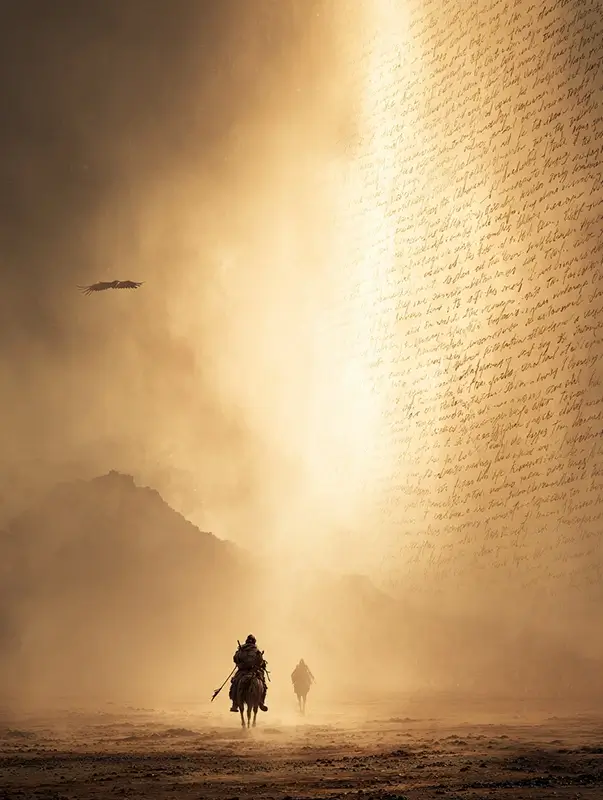
A scene showing the evolution of human communication across time. A glowing thread of light connects different moments: a clay tablet being written, a horse rider carrying a message, a pigeon flying across the sky.
CARD 5

Communication: A Never-Ending Journey

What do clay tablets, relay riders, and carrier pigeons all have in common? They are all part of the same extraordinary story — the story of how human beings have always risen to the challenge of reaching out across distances. Each civilization built on what came before, working out new solutions to the timeless need to share information. Every innovation set off a chain of developments that would eventually lead up to the digital networks we rely on today.

But why does this history matter to us now? Because communication has never been simply about passing on information — it has always been about holding together communities, carrying out the business of life, and keeping up human bonds across time and space. When the Persians set up their postal roads or medieval commanders sent out their pigeons, they were taking part in something far greater than logistics: they were building up the connective tissue of human civilization itself.

So next time you reach out to someone with a message, stop and think about the journey that led up to that moment. Every email you send out, every idea you write down, every story you pass on is part of a tradition that goes back thousands of years. Don't take for granted the remarkable systems that came before us — humanity has always found ways to carry on, and thanks to all those who came before, so can you. 🌍

Match the Communication History Phrasal Verbs
0/16

Click one item in Column A and its meaning in Column B. Complete all pairs.

Column A – Phrasal Verbs

Column B – Meanings

WeeklyCross teaches phrasal verbs through historical and cultural context. Each lesson connects to vocabulary practice on FlipVerbs and fluency levels on Flowglish — forming a complete learning ecosystem.

0%
Scroll to Top