How to Become a Hiker
Phrasal Verbs in Conext

Land that inspires, trails that challenge, life that endures


National Parks:
Preservation and Adventures Theme

Learn how to become a hiker while mastering essential phrasal verbs

1

How to Become a Hiker

Where every path leads to discovery

You are here
2

Building Your Hiking Foundation

From Preparation to Experience

Start Learning
3

Beyond the Basics: Trail Mastery

Understanding Trails and Training

Start Learning


Multimedia Learning Hub

🎥 Listen, watch and practise English with immersive videos, podcasts and shadowing

🎭 Phrasal Verbs Video Practice

English Story Video for Phrasal Verbs Practice
🌟 Explore All Themes
Discover story-based lessons, videos and interactive practice

🎙️ Story Podcast for Phrasal Verbs

Story Podcast for English Communication
🎯 Open the Phrasal Verbs Dictionary
Review advanced phrasal verbs with examples, meaning and practice
🏆

Your Progress

0
Correct
0
Incorrect
0%
Accuracy
0
Score
00:00
Study Time

🔊 Listen & Practice This Card — No Experience Needed: Start Here Practice shadowing: read while listening and repeat. Then write down a few expressions or sentences that stood out to you.
Speed:
0:00 / 0:00
Ready to play
A woman holding a glass filled with the essence of nature, as if she is drinking pure life. Inside the glass, swirling green mist, tiny glowing leaves, soft floating petals, and particles of light. Her expression is serene and mesmerized. Sunlight filtering through the trees creates golden bokeh around her
INTROD

🧗 Learn Hiking, Master English

Starting your hiking journey doesn't require expensive gear or peak physical fitness—just curiosity and willingness to step out into nature. This guide breaks down everything beginners need to know, from choosing your first trail to building confidence on increasingly challenging terrain.

While you learn practical hiking skills, you'll naturally pick up dozens of essential phrasal verbs that native speakers use when discussing outdoor activities, personal growth, and overcoming challenges. These aren't random vocabulary items—they're expressions that come up constantly in everyday English conversation.

Each section guides you through specific aspects of becoming a hiker: understanding why people take up this activity, exploring different trail types, finding community support, and preparing mentally and physically. Along the way, you'll see how phrasal verbs function naturally within authentic English contexts.

By the end of this lesson, you won't just understand hiking better—you'll have worked through real English usage patterns that transfer to countless other situations. The phrasal verbs you encounter here apply just as naturally to career challenges, relationship dynamics, and personal development journeys.

Below you'll find: practical hiking guidance, authentic phrasal verb usage in context, interactive exercises, and opportunities to practice what you've learned.

🔊 Listen & Practice This Card — No Experience Needed: Start Here Practice shadowing: read while listening and repeat. Then write down a few expressions or sentences that stood out to you.
Speed:
0:00 / 0:00
Ready to play
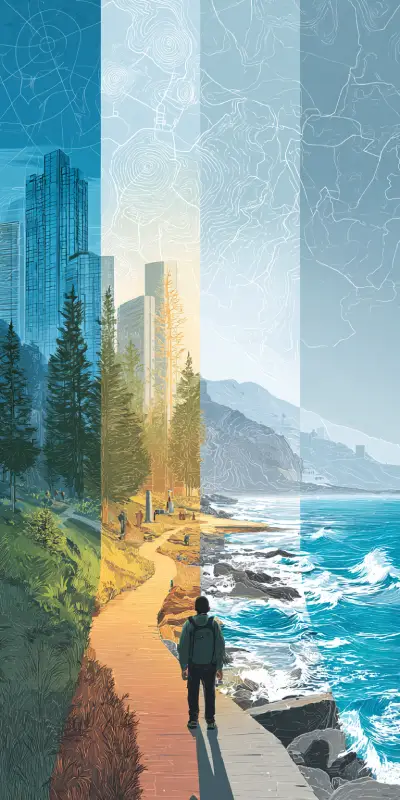
A beginner hiker walking alone on a scenic forest trail at golden hour, carrying a small backpack, looking relaxed and thoughtful, with a distant city skyline in the background and mountains ahead
CARD 2

No Experience Needed: Start Here

Hiking opens up incredible opportunities to get away from daily stress and reconnect with nature. When you set out on a trail, you leave behind the noise of city life and tune into the peaceful sounds of the wilderness. Many beginners worry about keeping up with experienced hikers, but everyone starts somewhere. The key is to ease into the activity gradually, building confidence with each adventure. As you take on different terrains, you'll figure out what works best for your fitness level and personal goals.

Beyond physical benefits, hiking helps you wind down mentally and work through complex thoughts. The rhythmic motion of walking allows your mind to slow down and sort out problems that seemed overwhelming before. Regular hikers often point out that trails give them space to think things over without distractions. You'll come across breathtaking views that make you stop and appreciate the moment. Over time, these outdoor experiences add up to significant improvements in both physical health and mental clarity.

Starting this journey means you're signing up for lifelong adventure and personal growth. Each hike brings new lessons about perseverance, planning, and adapting to unexpected situations. You'll run into challenges that push you beyond your comfort zone, but these moments help you grow stronger. The hiking community is welcoming and always ready to help newcomers get started on the right foot.


🔊 Listen & Practice This Card — Types of Trails: Find Your Perfect Path Practice shadowing: read while listening and repeat. Then write down a few expressions or sentences that stood out to you.
Speed:
0:00 / 0:00
Ready to play
Hiker with backpack looking out at a misty pine forest, representing different types of trails to explore
CARD 3

Types of Trails: Find Your Perfect Path

Trails come in countless forms, and you don't need mountains or remote wilderness to get started with hiking. Urban trails wind through city parks, along riverbanks, and across historic neighborhoods, making it easy to fit in a quick walk during lunch breaks or after work. These accessible paths help beginners ease into hiking without having to travel far or gear up extensively. Coastal routes take you along beaches where waves roll in, over rocky shores, and through seaside cliffs that open up stunning ocean views. Whether you live near mountains or by the sea, in the countryside or downtown, there's always a trail waiting for you to set out and explore what lies around the next bend.

Traditional mountain and forest trails offer the classic hiking experience that draws people into national parks and nature reserves worldwide. These paths lead you through dense woodlands, up challenging slopes, and across alpine meadows where wildlife shows up unexpectedly. Field trails cut through open countryside, farmland, and prairies where you can take in wide horizons without trees blocking your view. Waterfront paths follow rivers, lakes, and canals, providing flat, peaceful routes perfect for building up endurance gradually. Each environment calls for slightly different preparation, but the basic principles carry over – start with easier terrain, work out what conditions suit you best, and slowly move on to more challenging landscapes as confidence grows.

The beauty of hiking lies in its flexibility and the way different trail types cater to various moods, fitness levels, and time constraints. Some days you might head out for a demanding mountain climb that pushes your limits, while other times a gentle beach walk helps you wind down and clear your mind. Urban trails let you squeeze in exercise without long drives, and countryside paths get you away from crowds when you need solitude. Don't feel pressured to check off famous peaks or travel to distant locations – the trails in your own area hold just as much value for learning, growing, and connecting with nature.


🔊 Listen & Practice This Card — Finding Your First Trail: Community, Safety & Resources Practice shadowing: read while listening and repeat. Then write down a few expressions or sentences that stood out to you.
Speed:
0:00 / 0:00
Ready to play
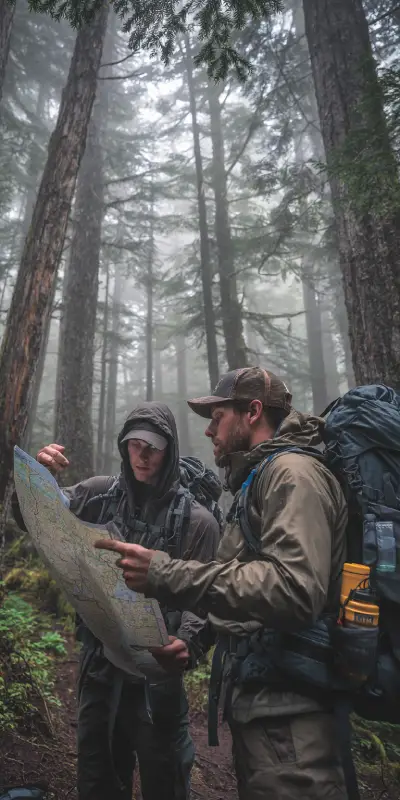
A friendly hiking group at the start of a trail. A diverse group of beginners stands in a semicircle around an experienced guide who is holding a topographic map and pointing to the route. Some hikers are looking at the map, others are checking a hiking app on their smartphones, showing trail info and elevation.
Card 4

Finding Your First Trail: Community, Safety & Resources

Starting your hiking journey doesn't mean you have to figure everything out on your own. Local hiking groups bring together beginners and experienced trekkers who are eager to pass on their knowledge and help newcomers get started safely. These communities meet regularly for group hikes where you can pick up essential skills, learn about regional trails, and build confidence before setting out independently. Tourism organizations often put together guided nature walks specifically designed for people trying out hiking for the first time, providing expert leaders who point out local flora, fauna, and geological features along the way.

Geological study groups and environmental education programs take you deeper into understanding the landscapes you're walking through. These organizations set up field trips to significant natural sites, teaching you how to read terrain, recognize rock formations, and appreciate the forces that shaped the valleys and peaks around you. Beyond organized groups, specialized trail apps have changed how hikers plan adventures and stay safe – these digital tools map out routes, show elevation changes, mark water sources, and let you check in with detailed trail conditions before heading out. Many apps also allow users to leave reviews and tips, creating a knowledge base that helps you weigh up different options and pick trails that match your current skill level.

While it's tempting to strike out alone for your first experience, solo hiking as a beginner carries risks that shouldn't be brushed aside lightly. Without someone to fall back on if you twist an ankle, lose the path, or run into unexpected weather, small problems can turn into serious emergencies. Experienced hikers who venture out solo rely on years of accumulated knowledge to work around difficulties, but beginners haven't built up that problem-solving toolkit yet. Starting with groups gives you a safety net while you learn to deal with challenges, read maps confidently, and tune into warning signs that something's going wrong. Once you've clocked up enough group hikes and thoroughly checked over your skills, you'll know when you're ready to take on trails independently – but there's no shame in continuing to hike with others, as many lifelong adventurers prefer the companionship and shared experiences that group hiking brings along.


🔊 Listen & Practice This Card — Conclusion: From This Page to That First Trail Practice shadowing: read while listening and repeat. Then write down a few expressions or sentences that stood out to you.
Speed:
0:00 / 0:00
Ready to play
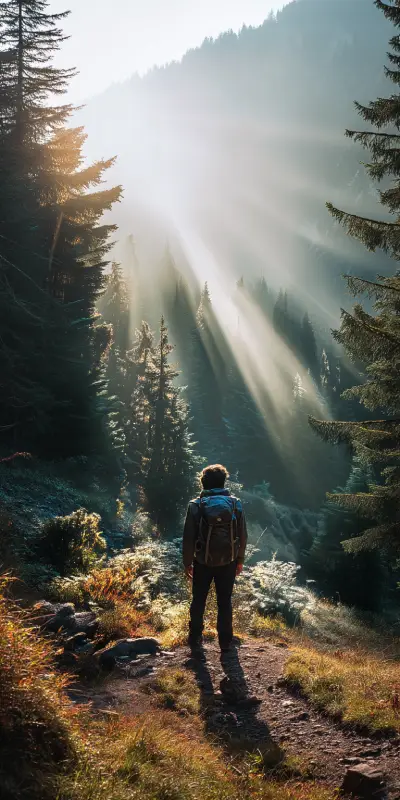
Hiker standing on mountain cliff overlooking misty forest valley at sunrise
Conclusion

Conclusion: From This Page to That First Trail

National parks and hiking trails offer far more than scenic views and Instagram moments—they provide pathways to better health, clearer thinking, and deeper connection with the natural world. As you've read through this guide, you've encountered dozens of phrasal verbs that native speakers use when discussing outdoor activities, nature conservation, and personal growth. But the real learning happens when you try out these expressions in your own conversations and writing.

Whether you're drawn to gentle coastal walks or challenging mountain climbs, getting started matters more than choosing the "perfect" first trail. Your hiking practice will grow and change over time as you figure out what landscapes speak to you, what fitness levels you're working toward, and what kind of outdoor experiences fill you up rather than drain you down. Some people fall in love with solo dawn hikes where they can think things over in silence; others thrive in social groups where shared laughter and encouragement carry everyone forward.

Remember that every experienced hiker started exactly where you are now—uncertain about gear, worried about getting lost, wondering whether they had what it takes to make it up that hill. They showed up anyway, put one foot in front of the other, and gradually built up confidence through consistent practice. Your journey plays out the same way, one trail at a time.

The phrasal verbs you've encountered here—from "setting out" and "easing into" to "bouncing back" and "moving on"—don't just describe hiking; they map the broader path of learning, growing, and pushing beyond what you thought possible. So lace up those shoes, check your water supply, let someone know where you're headed, and step onto that first trail. The landscapes ahead are waiting, and so is the version of yourself you'll discover along the way. 🥾🌲


Match the Hiking Preparation Phrasal Verbs
0/10

Click one item in Column A and its meaning in Column B. Complete all pairs.

Column A – Phrasal Verbs

Column B – Meanings

Alessandra Fernandes Nóbrega
History teacher and educational content creator. M.A. in History of Education (UFPB). Creator of WeeklyCross, FlipVerbs and Flowglish — a connected ecosystem for learning English through context, not memorisation. Trained in educational entrepreneurship in Finland.

0%
Scroll to Top