Phrasal Verbs • Level A2-B1

National Parks

Phrasal Verbs Through Preservations and Adventures

1

How Parks Came to Be

Where conservation takes root

You are here
2

National Parks: Nature and People

Biodiversity, Native Peoples, and Park Activities

Start Learning
3

National Parks: Challenges and Solutions

Protecting the World's Greatest Parks

Start Learning

Multimedia Learning Hub

🎥 Listen, watch and practise English with immersive videos, podcasts and shadowing

🎭 Phrasal Verbs Video Practice

English Story Video for Phrasal Verbs Practice
🌟 Explore All Themes
Discover story-based lessons, videos and interactive practice

🎙️ Story Podcast for Phrasal Verbs

Story Podcast for English Communication
🎯 Open the Phrasal Verbs Dictionary
Review advanced phrasal verbs with examples, meaning and practice
🏆

Your Progress

0
Correct
0
Incorrect
0%
Accuracy
0
Score
00:00
Study Time

🔊 Listen & Practice This Card — What Are National Practice shadowing: read while listening and repeat. Then write down a few expressions or sentences that stood out to you.
Speed:
0:00 / 0:00
Ready to play
A woman holding a glass filled with the essence of nature, as if she is drinking pure life. Inside the glass, swirling green mist, tiny glowing leaves, soft floating petals, and particles of light. Her expression is serene and mesmerized. Sunlight filtering through the trees creates golden bokeh around her
INTRO

Learn English While Exploring the Wild

National parks are more than breathtaking landscapes—they're sanctuaries where we reconnect with nature and ourselves. In a world that constantly pulls us toward screens and stress, intentional contact with the wild offers a powerful reset for mind and body.

But these protected spaces also play a vital role in preserving wildlife and ecosystems for future generations. When we learn about national parks, we don't just expand our vocabulary—we deepen our understanding of why conservation matters.

At WeeklyCross, we believe the best way to master phrasal verbs is by experiencing them in meaningful contexts. That's why this hub explores nature, self-care, and environmental awareness—topics that inspire you while helping you learn how native speakers really use English.

Below you'll find key phrasal verbs featured on this page—but there are plenty more waiting for you to discover. Enjoy your journey through language and nature! 🌿
🔊 Listen & Practice This Card — What Are National Practice shadowing: read while listening and repeat. Then write down a few expressions or sentences that stood out to you.
Speed:
0:00 / 0:00
Ready to play
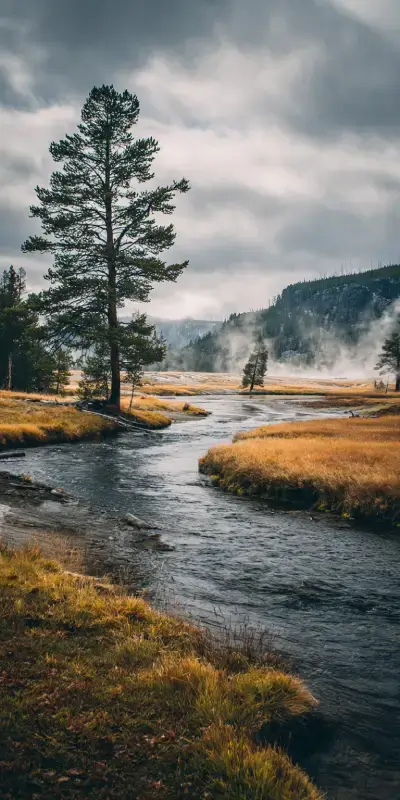
panoramic landscape of yellowstone
CARD 2

What Are National Parks?

Defining Protected Wilderness

National parks are specially designated areas that set aside pristine landscapes for conservation and public enjoyment. Governments set up these protected zones to keep out commercial exploitation and preserve natural ecosystems for future generations. Unlike regular public lands, national parks come under strict regulations that prevent hunting, mining, and residential development. Park authorities carry out careful management practices to ensure that wildlife populations can thrive in their natural habitats without human interference. When you look into the history of conservation movements, you'll discover that national parks represent humanity's commitment to hold onto Earth's most spectacular wild places. These protected areas stand for the belief that some landscapes are too precious to give up to development, and they call for our active protection and respect.

Beyond Simple Protection

National parks go beyond mere preservation—they also serve important educational and recreational purposes. Visitors can find out about ecosystems, geology, and wildlife through interpretive programs that park rangers put together throughout the year. These protected areas make up only a small percentage of Earth's surface, yet they account for enormous biodiversity and ecological services. When communities come together to support national parks, they help ensure these treasures carry on existing for centuries. Scientists regularly turn to national parks as living laboratories where they can figure out how ecosystems function without significant human disturbance, making these areas invaluable for research and conservation science.

🔊 Listen & Practice This Card — The Birth of National Parks Practice shadowing: read while listening and repeat. Then write down a few expressions or sentences that stood out to you.
Speed:
0:00 / 0:00
Ready to play
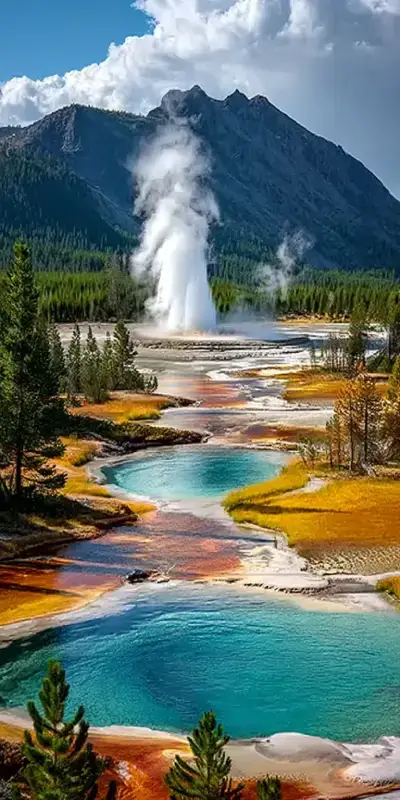
Yellowstone National Park featuring active geysers erupting into the sky. Powerful columns of steam and hot water rising from the ground, surrounded by colorful mineral terraces and geothermal pools in shades of blue, turquoise, orange, and white.
CARD 3

The Birth of National Parks

In 1872, the United States brought about a revolutionary idea when Congress set up Yellowstone as the world's first national park. Explorers who had come across Yellowstone's geysers and hot springs spoke out passionately about protecting this geological wonderland, and their advocacy paid off when President Grant signed the legislation. This decision came about after years of debate between those who wanted to take over the land for private profit and conservationists who refused to give in to commercial pressures. The establishment of Yellowstone set off a global movement that would eventually spread out across continents. Other nations took up the concept enthusiastically, recognizing they needed to act on conservation before pristine wilderness disappeared forever.

The national park idea quickly caught on around the world as countries woke up to the reality that industrialization was eating away at wild spaces. Australia set up Royal National Park in 1879, and Canada followed up with Banff in 1885. By the early 20th century, conservation advocates were reaching out to governments everywhere, urging them to put aside land before it was too late. The movement built up momentum as explorers and naturalists brought back stunning photographs and accounts that stirred up public interest in preservation. Countries began to draw up legislation to protect their natural heritage, and international organizations sprang up to help nations work out the best approaches to conservation management.


🔊 Listen & Practice This Card — Looking Ahead: Climate Change And Conservation Practice shadowing: read while listening and repeat. Then write down a few expressions or sentences that stood out to you.
Speed:
0:00 / 0:00
Ready to play
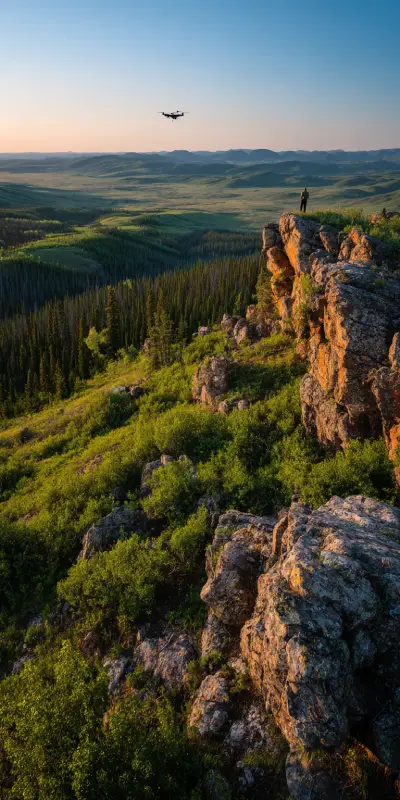
vast national park landscape at golden hour, where a lone park ranger stands on a rocky ridge overlooking an ancient forest stretching to the horizon.
CARD

Looking Ahead: The Future of National Parks

As climate change speeds up, national parks must adapt to protect ecosystems that are rapidly changing. Scientists are working out new strategies to help species that can no longer hold on in their traditional habitats. Many parks are teaming up with neighboring protected areas to create wildlife corridors that allow animals to move around freely. Conservation leaders are calling for governments to step up funding before vulnerable ecosystems break down completely. The parks that pull through this crisis will likely look very different from the wilderness areas we know today.

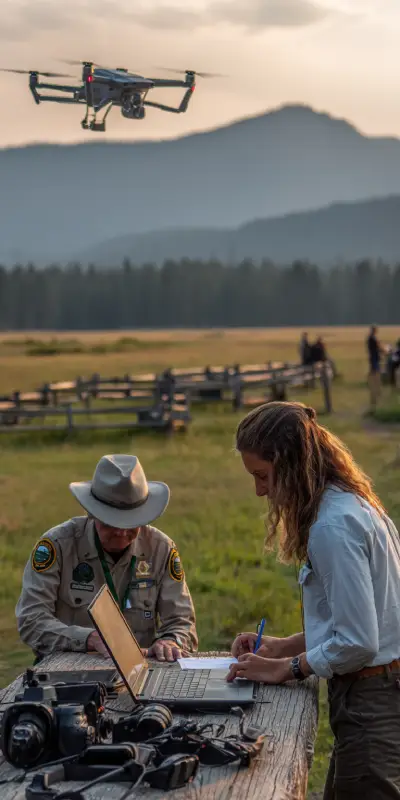
Technology is opening up exciting possibilities for national park management and visitor engagement. Drones and satellite imaging help rangers keep track of wildlife populations and catch on to illegal activities like poaching. Virtual reality experiences are bringing in people who cannot physically visit remote wilderness areas. This technology helps them connect with nature from anywhere in the world. Park services are rolling out mobile apps that cut down on the need for printed materials while providing richer educational content. These innovations point to a future where conservation and technology work hand in hand.

The next generation of conservationists is gearing up to take on the immense challenges ahead. Young activists are speaking out about environmental protection and pushing for bold action on climate policy. Communities around the world are coming around to the idea that protected areas benefit everyone, not just nature enthusiasts. International cooperation continues to build up as countries figure out how to share resources and expertise across borders. If humanity follows through on its commitment to conservation, national parks will carry on inspiring wonder for centuries to come.

🔊 Listen & Practice This Card — Looking Ahead: Climate Change And Conservation Practice shadowing: read while listening and repeat. Then write down a few expressions or sentences that stood out to you.
Speed:
0:00 / 0:00
Ready to play
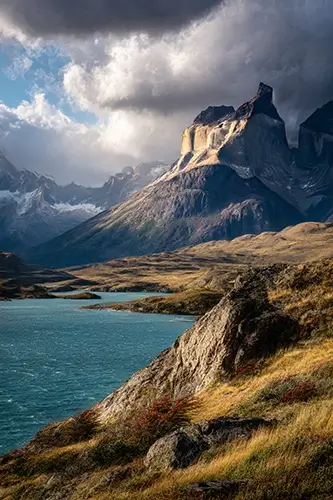
Torres del Paine National Park in Patagonia, Chile. The iconic granite towers rising dramatically above turquoise glacial lakes, rugged mountains and wide open valleys.
CARD 4

Looking Ahead: Climate Change And Conservation

The Serengeti National Park in Tanzania stands out as one of Earth's most spectacular wildlife sanctuaries, where massive herds move across endless plains in ancient migration patterns. Visitors who show up during migration season can look on as millions of wildebeest and zebras press on through dangerous river crossings, facing predators that lie in wait along their route. This protected ecosystem has held onto its wild character despite pressures that have broken up wildlife corridors elsewhere in Africa. Conservation efforts that date back decades have paid off, allowing animal populations to keep up robust numbers. The Serengeti's success demonstrates what can happen when governments stick with long-term protection policies and take on the challenge of wildlife conservation seriously.

Torres del Paine in Chile takes your breath away with granite peaks that shoot up from Patagonian steppe, while turquoise lakes spread out below massive glaciers. This park has become known for challenging treks that wear out even experienced hikers but reward them with views that show off nature's raw power. Meanwhile, the Great Barrier Reef Marine Park stretches along Australia's northeast coast, protecting coral ecosystems that teem with incredible biodiversity. Scientists who dive into reef research have turned up thousands of species, though rising ocean temperatures threaten to wipe out these delicate corals. These iconic parks sum up the diversity of protected landscapes worldwide and point to the urgent need to step up conservation efforts globally.

🔊 Listen & Practice This Card — Conclusion: The Future of National Parks Practice shadowing: read while listening and repeat. Then write down a few expressions or sentences that stood out to you.
Speed:
0:00 / 0:00
Ready to play
two park rangers in uniform sitting at a monitoring a park in the wilderness with moderns equipment
CARD

Conclusion: The Future of National Parks

Conservation organizations are pushing for ambitious goals to set aside at least 30% of Earth's land and oceans by 2030. This movement, which has picked up support from numerous governments, aims to scale up protected areas significantly. New parks are springing up in regions that were previously left out of conservation planning, including marine environments and urban green spaces. Indigenous-led conservation initiatives are taking off, with communities taking back control of ancestral lands and turning them into protected areas under traditional management. As these efforts pan out, they could bring about a fundamental shift in how humanity relates to wild nature, moving away from exploitation toward stewardship.

The future of national parks will likely branch out beyond traditional government-managed reserves to include diverse protection schemes. Private conservation groups are setting up wildlife corridors that link up isolated parks, helping species get around habitat fragmentation. Some countries are trying out community-managed protected areas where local people share in both responsibilities and benefits. Rewilding projects that bring back extirpated species are catching on, helping degraded ecosystems come back to health. As climate change plays out over coming decades, protected area networks will need to adapt to shifting conditions and take into account the need for species to move through changing landscapes. These evolving approaches hold out hope that conservation can keep up with accelerating environmental challenges.


National Parks Phrasal Verbs Exercise

Click on the blanks to choose the correct phrasal verb

Question 1:
The concept of protected areas _________ a revolution in how humanity treats nature.
Question 2:
Australia _________ with Royal National Park after seeing America's success.
Question 3:
Park rangers _________ educational programs to help visitors _________ about local ecosystems.
Question 4:
Researchers _________ parks as ideal places where ecosystems can _________ existing naturally.
Question 5:
Conservation efforts _________ when communities _________ to protect endangered species.
Question 6:
Early conservationists refused to _________ to pressure and fought to _________ wild places.
Question 7:
When visiting a national park, you can _________ the beauty of untouched wilderness and _________ fascinating wildlife species.
Question 8:
Protected areas _________ a small portion of Earth but _________ incredible ecological value.
Question 9:
Documentary films _________ public awareness and help people _________ to environmental threats.
Question 10:
Many countries _________ conservation movements after seeing how successful parks _________.
Score: 0/10 questions correct (0%)
Alessandra Fernandes Nóbrega
History teacher and educational content creator. M.A. in History of Education (UFPB). Creator of WeeklyCross, FlipVerbs and Flowglish — a connected ecosystem for learning English through context, not memorisation. Trained in educational entrepreneurship in Finland.

WeeklyCross teaches phrasal verbs through historical and cultural context. Each lesson connects to vocabulary practice on FlipVerbs and fluency levels on Flowglish — forming a complete learning ecosystem.


0%
Scroll to Top