BRIDGING THE DISTANCE

Phrasal Verbs • Level A2-B1

From Primitive Groups to Organized Communication

Human Communication Theme

Learn phrasal verbs through different periods of communication history

1

BRIDGING THE DISTANCE

Learn phrasal verbs from talking drums to Smoke & Fire

You are here
2

WORDS IN THE WIND

Master phrasal verbs through long-distance communication evolution

Start Learning
3

Words Multiplied

Monks, Machines and the Birth of Mass Communication

Start Learning

Multimedia Learning Hub

🎥 Listen, watch and practise English with immersive videos, podcasts and shadowing

🎭 Phrasal Verbs Video Practice

English Story Video for Phrasal Verbs Practice
🌟 Explore All Themes
Discover story-based lessons, videos and interactive practice

🎙️ Story Podcast for Phrasal Verbs

Story Podcast for English Communication
🎯 Open the Phrasal Verbs Dictionary
Review advanced phrasal verbs with examples, meaning and practice
🏆

Your Progress

0
Correct
0
Incorrect
0%
Accuracy
0
Score
00:00
Study Time

🔊 Listen & Practice This Card — The Need to Reach Beyond Practice shadowing: read while listening and repeat. Then write down a few expressions or sentences that stood out to you.
Speed:
0:00 / 0:00
Ready to play
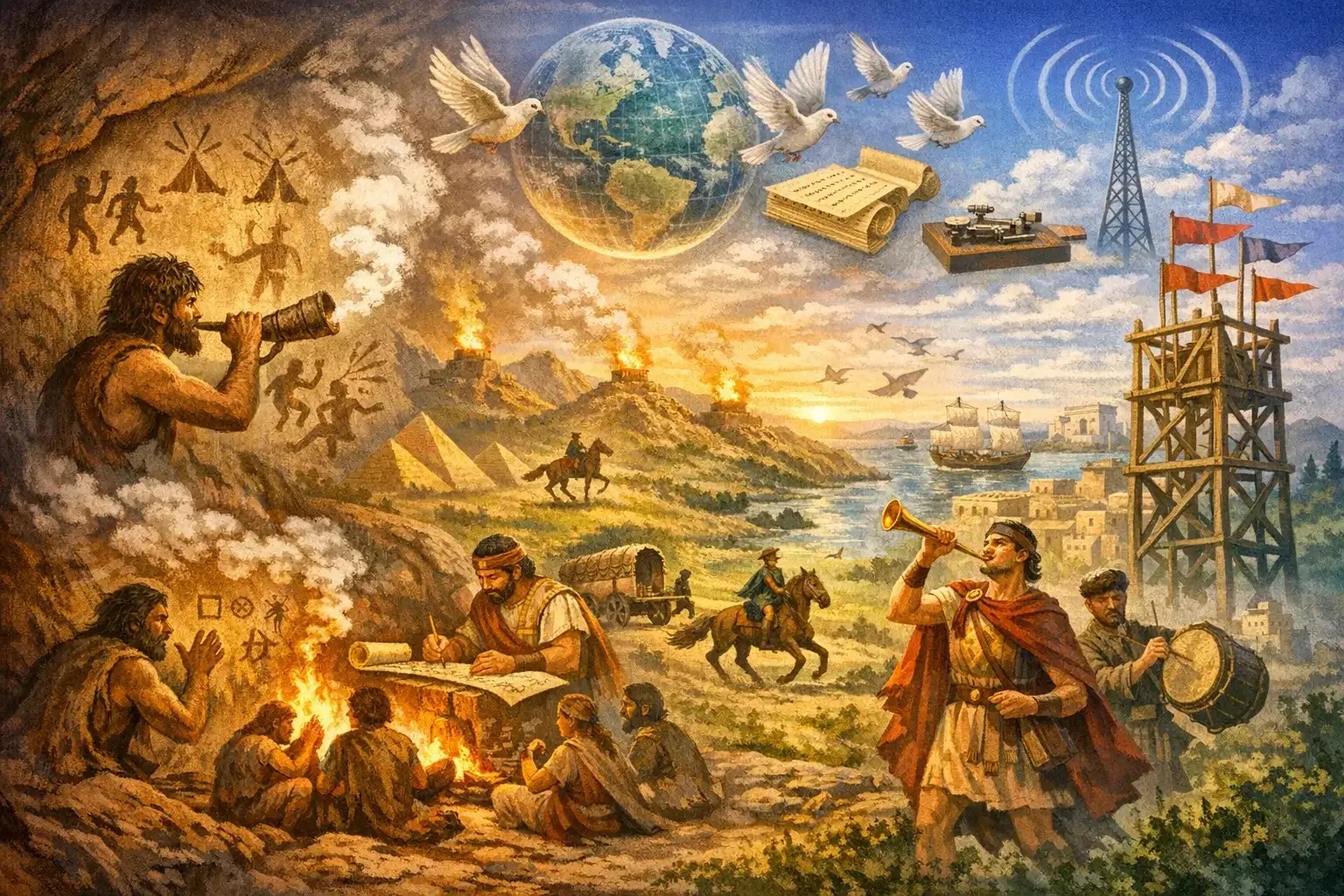
Illustration showing the evolution of human communication, from prehistoric cave drawings and early humans using horns and gestures, to ancient writing, messengers on horseback, signal fires, drums, ships, and finally modern radio transmission, all blended into a single historical landscape.
INTRO

The Need to Reach Beyond

Human communication has gone through an extraordinary evolution since the dawn of civilization. From the first gestures and shouts of our ancestors to the sophisticated systems of ancient empires, this journey reveals how societies have always looked for more effective ways to transmit information. Long before writing came about, early humans had already figured out that survival itself depended on the ability to pass on knowledge to others.

When early communities began to settle down in larger groups, they soon came across the need to communicate beyond the limitations of speech. The human voice, however expressive, could not reach out over great distances or last through time. This limitation led our ancestors to work out alternative methods that could get around these natural barriers and connect people across space and time.

As populations grew and territories spread out, the challenges of communication became increasingly complex. Communities had to come up with creative solutions that could carry messages farther than any voice could carry them. These early systems did not simply solve practical problems — they also helped build up the social bonds that held communities together across vast landscapes.

What stands out about this history is not just the ingenuity of the solutions, but the universal human drive behind them. Across every continent, different cultures independently set up their own systems for reaching out beyond physical limits. By looking back at these ancient methods, we can find out a great deal about who we are as a species — and how deeply the need to connect is woven into our nature.

🔊 Listen & Practice This Card — Cave Paintings: Messages Across Time Practice shadowing: read while listening and repeat. Then write down a few expressions or sentences that stood out to you.
Speed:
0:00 / 0:00
Ready to play
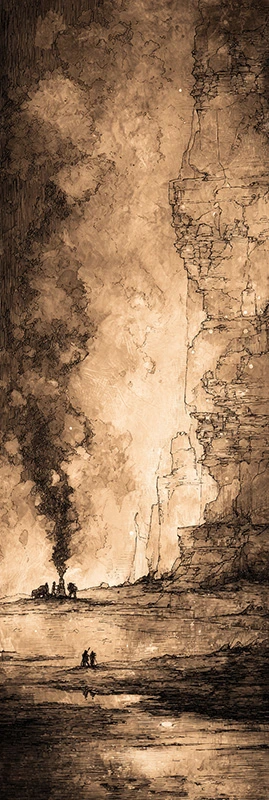
prehistoric cave paintings, ancient rock inscriptions, human figure painted on stone walls, primitive symbols, earthy tones, firelight illumination, textured rock surface, early human storytelling, archaeological atmosphere, highly detailed.
CARD 2

Cave Paintings: Messages Across Time

Long before cities came about and writing systems were developed, our ancestors were already reaching out across time through images painted on stone walls. Cave paintings dating back more than 40,000 years stand out as among the earliest known examples of intentional human communication. These ancient artists set out to do something remarkable: to pass on knowledge, stories, and meaning to people they would never meet.

Unlike spoken words that fade out the moment they are uttered, images carved and painted into rock could hold on to their messages for thousands of years. The people who made these paintings seemed to figure out intuitively that permanence was a form of power. By putting together images of animals, hunting scenes, and symbolic forms, they were building up a visual language that could travel through time rather than across space.

Researchers have pointed out that many cave paintings were deliberately placed in acoustically significant locations inside caves, suggesting that their creators thought through the viewer's experience with great care. These spaces were likely set up as sacred environments where communities could come together to make sense of the world and hand down their accumulated wisdom to future generations.

What these ancient communicators came up with was, in essence, a solution to one of humanity's most profound challenges: how to reach out beyond the limits of a single lifetime. The paintings of Lascaux, Altamira, and the Serra da Capivara right here in Brazil have lived on through tens of thousands of years, speaking to us still. They remind us that the desire to communicate across distance — even the distance of time — goes back to the very roots of what it means to be human.

🔊 Listen & Practice This Card — Talking Drums: The Voice of the Forest Practice shadowing: read while listening and repeat. Then write down a few expressions or sentences that stood out to you.
Speed:
0:00 / 0:00
Ready to play
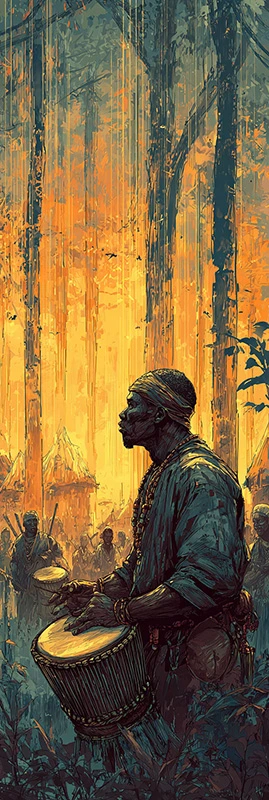
West African musician playing talking drums used to send messages across distant villages
CARD 3

Talking Drums: The Voice of the Forest

In West Africa, ancient communities came up with a fascinating system known as talking drums to get around the limitations of the human voice. These special instruments could bring about the rhythms and intonations of spoken language, allowing complex messages to be passed on across great distances in a matter of minutes. Villages that were kilometers apart could carry on full conversations through the intricate patterns of drumbeats.

Skilled drummers had to grow up learning a sophisticated musical code that could convey not just simple warnings but detailed information. The drums served to call out important arrivals, warn of imminent dangers, and even sort out disputes between distant communities. A trained listener could pick up on subtle variations in rhythm and tone, much as we read between the lines of written text today, and fully carry out the meaning intended by the sender.

This system of communication spread out across vast networks of villages, creating what historians have described as an early long-distance communication infrastructure. When a message needed to travel far, drummers in relay stations would pick up the signal and pass it on to the next village down the line. The speed at which news could travel through these networks often surprised outsiders, who could not figure out how information had moved so quickly through dense forest.

The talking drum tradition points out something important about human ingenuity: effective communication does not have to rely on writing or electronic signals. These communities built up a sophisticated system entirely from acoustic principles and human skill, handed down through generations of careful training. Even today, some communities in West Africa keep up this ancient tradition, making sure that this extraordinary form of communication does not die out.

🔊 Listen & Practice This Card — Smoke & Fire: Writing in the Sky Practice shadowing: read while listening and repeat. Then write down a few expressions or sentences that stood out to you.
Speed:
0:00 / 0:00
Ready to play
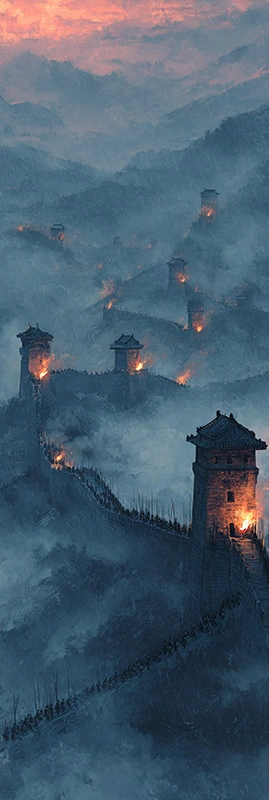
A cinematic historical scene showing ancient long-distance communication using smoke and fire. In the background, the Great Wall of China with watchtowers lighting colored fire signals.
CARD 4

Smoke & Fire: Writing in the Sky

While African communities were working out acoustic solutions to long-distance communication, cultures across Asia and the Americas were turning to light and smoke. The ancient Chinese set up an elaborate system of watchtowers along the Great Wall, where soldiers lit up fires of different colors to warn of approaching invasions. This network could pass on urgent military messages across hundreds of kilometers in just a few hours.

The Greeks also came up with their own fire signaling system, which Aeschylus famously wrote about in his play Agamemnon. According to the story, news of the fall of Troy was carried out across the Aegean Sea through a chain of mountaintop fires, reaching Mycenae that same night. Whether or not the story holds up historically, it reflects how deeply these cultures thought through the challenge of communicating across vast distances quickly.

Indigenous peoples of North America developed their own smoke signal systems, building up over generations a nuanced visual language. Different patterns of smoke — thick or thin, rising steadily or broken up into puffs — could stand for specific messages that trained observers could read out from miles away. These systems worked remarkably well in open landscapes where communities had spread out across wide, unobstructed territories.

What these fire and smoke systems share with talking drums and cave paintings is the fundamental human impulse to reach out beyond the body's natural limits. Each culture, facing its own geographical challenges, came up with solutions that fit its environment. These ancient systems did not simply fade out with the arrival of newer technologies — they passed on a legacy of ingenuity that every communication network since has continued to build on.

🔊 Listen & Practice This Card — Conclusion: From Stone Walls to Satellite Signals Practice shadowing: read while listening and repeat. Then write down a few expressions or sentences that stood out to you.
Speed:
0:00 / 0:00
Ready to play
representation of human communication across time, with ancient cave paintings, rhythmic drums, rising smoke signals
CONCLUSION

Conclusion: From Stone Walls to Satellite Signals

What cave paintings, talking drums, and smoke signals all have in common is more than just age. Each of these systems was born from the same deep human need: to carry on a conversation beyond the limits of the body, to bring together minds separated by distance, time, or landscape. They were not primitive attempts at something better — they were brilliant solutions to the challenges their creators actually faced. Every communication technology we use today builds on the logic that these ancient systems first established. The idea that a message can give way to a signal, that a signal can travel faster than a body, and that meaning can be handed down across generations — these are not modern inventions. They are ancient insights that have grown into the global networks we now take for granted. It is worth looking back at these origins not out of nostalgia, but out of genuine respect. The engineers who set off the first telegraph signal, the scientists who built the first radio transmitter — they were all going beyond what their own ancestors thought possible, just as those early drummers and painters had done before them. Every leap in communication history holds on to something from the one before it. As we move on into an era of instant global messaging and artificial intelligence, these ancient methods live on as a reminder. Human beings have always found a way to reach across distance. We have come a long way from firelight on cave walls — but the impulse that put those first images on stone is the same one that connects us all today.

Evolution of Human Communication

Click on the blanks and choose the correct word

Question 1:
When early communities began to settle down in larger groups, they soon came across the need to communicate beyond the limitations of _________. The human _________, however expressive, could not reach out over great _________ or last through time.
Question 2:
Meanwhile, other cultures turned to smoke and fire. The ancient _________ put together an elaborate system of _________ along the Great Wall, where soldiers lit up _________ with smoke of different colors to warn about approaching _________.
Question 3:
In West Africa, ancient communities came up with a fascinating system known as _________ drums. These special instruments could bring about the _________ and intonations of spoken language, allowing _________ messages to be passed on across great distances.
Question 4:
The drums served to announce important _________, warn of imminent _________, and even _________ disputes between distant villages.
Question 5:
Human communication has gone through an extraordinary _________ since the dawn of civilization. From the first gestures and shouts of our ancestors to the sophisticated _________ systems of ancient empires, this journey reveals how societies have always looked for more effective ways to transmit _________.
Score: 0/5 questions correct (0%)

WeeklyCross teaches phrasal verbs through historical and cultural context. Each lesson connects to vocabulary practice on FlipVerbs and fluency levels on Flowglish — forming a complete learning ecosystem.

0%
Scroll to Top