When the World Suddenly Got Smaller
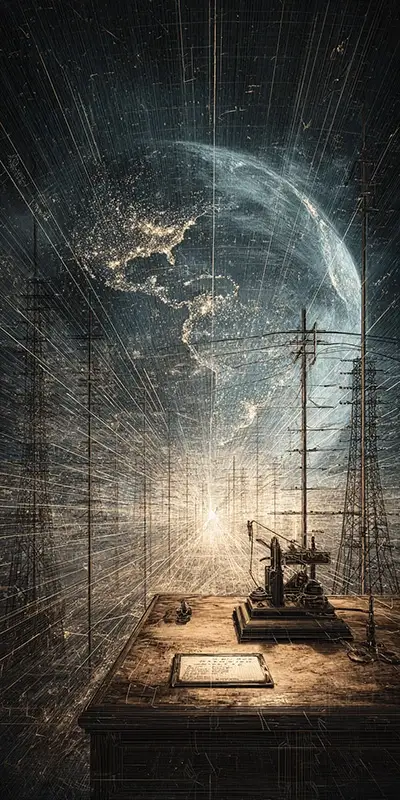
Samuel Morse had already cracked the code — literally. The system of dots and dashes he came up with gave humans a way to break down language into electrical pulses. But a code without a machine to carry it is just an idea sitting on paper. The telegraph was the missing piece: the physical infrastructure that could take those pulses and send them out across hundreds of miles of copper wire in seconds. Think of it this way — Morse built the language, and the telegraph built the road.
Before the telegraph came along, news traveled at the speed of a horse. A battle fought in Europe could take weeks to show up in an American newspaper. Stock prices in London had no way of getting through to traders in New York before fortunes were already lost or made. The world was vast, slow, and stubbornly disconnected — and most people had simply accepted that this was just the way things were. Then the telegraph showed up and made everyone rethink everything.
What followed wasn't simply a faster postal service. The telegraph brought about a shift so deep that people at the time struggled to find words for it. Businesses had to build up entirely new ways of operating. Governments had to work out new strategies for controlling information. Journalists had to throw out everything they knew about deadlines. The wire didn't just speed up the world — it turned it inside out, and nobody was quite ready for what came next.