Multimedia Learning Hub

🎥 Listen, watch and practise English with immersive videos, podcasts and shadowing

🎭 Phrasal Verbs Video Practice

English Story Video for Phrasal Verbs Practice
🌟 Explore All Themes
Discover story-based lessons, videos and interactive practice

🎙️ Story Podcast for Phrasal Verbs

Story Podcast for English Communication
🎯 Open the Phrasal Verbs Dictionary
Review advanced phrasal verbs with examples, meaning and practice
🏆

Your Progress

0
Correct
0
Incorrect
0%
Accuracy
0
Score
00:00
Study Time

🔊 Listen & Practice This Card — Bisons Near to extinction Practice shadowing: read while listening and repeat. Then write down a few expressions or sentences that stood out to you.
Speed:
0:00 / 0:00
Ready to play
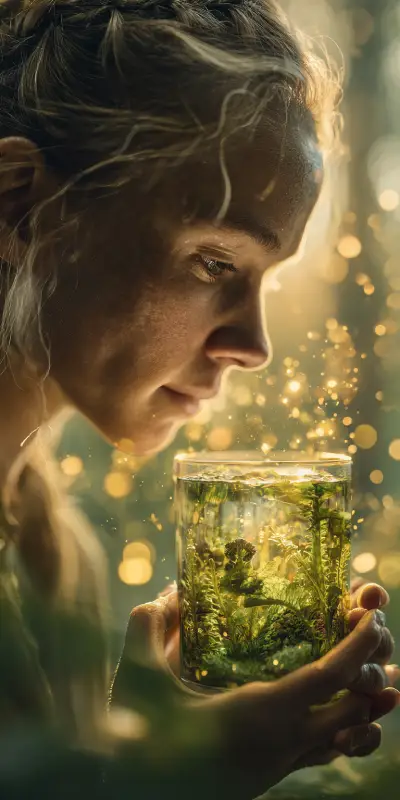
A woman holding a glass filled with the essence of nature
INTRO

🦬 Giants of the Plains: What Makes Bison Unique

The American bison is a living monument to resilience. Standing up to 1.8 meters tall and weighing up to 900 kilograms, bison are the largest land mammals in North America. They can run at 65 km/h, jump 1.8-meter fences, and survive temperatures of -40°C. Their thick skulls act as snowplows in winter, pushing aside snow to reach grass underneath. But bison aren't just impressive physically. They're ecosystem engineers. When bison graze, they don't just eat grass—they transform landscapes. Their hooves break up soil, allowing seeds to take root. Their wallowing creates depressions that fill with rainwater, becoming mini-wetlands for amphibians and insects. Their waste fertilizes prairies. Where bison roam, biodiversity goes up. For over 10,000 years, Indigenous peoples of the Great Plains built their lives around bison. The animals provided everything: meat for food, hides for shelter and clothing, bones for tools, sinew for thread. Nothing was wasted. The near-extinction of bison wasn't just an ecological disaster. It was cultural genocide—a deliberate attempt to wipe out both a species and the peoples who depended on it. That's what makes Yellowstone's recovery so powerful. Every bison alive today carries the genes of those 23 survivors. Every calf born is proof that we can make up for our worst mistakes.
↗ Click to explore in the Dictionary: break up take root wipe out make up for

🔊 Listen & Practice This Card — Bisons Near to extinction Practice shadowing: read while listening and repeat. Then write down a few expressions or sentences that stood out to you.
Speed:
0:00 / 0:00
Ready to play
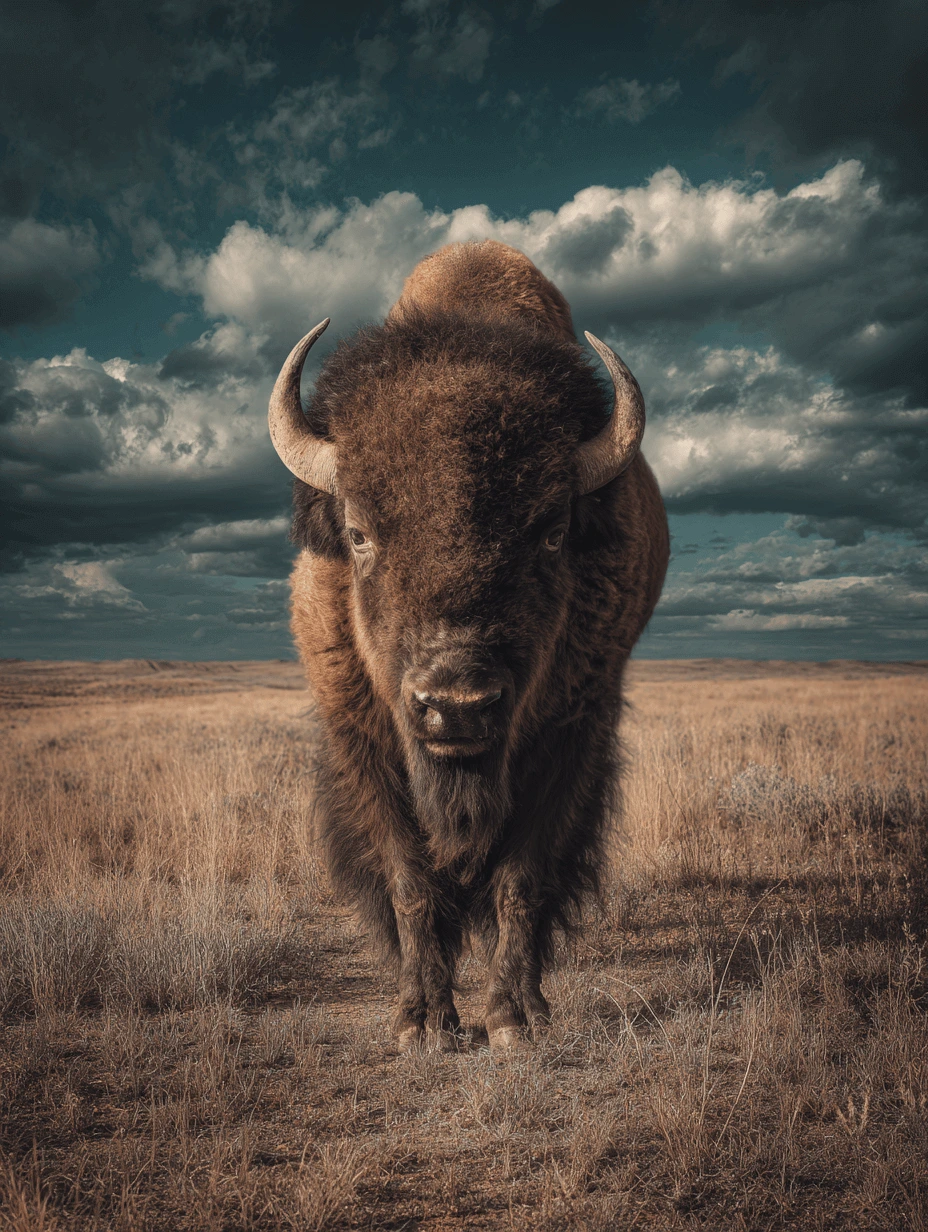
A powerful American bison standing alone in a golden grassland under a dramatic, cloudy sky. The animal faces the viewer directly, symbolizing strength, resilience, and the success of conservation efforts in national parks.
AMERICAS

🌎 The Yellowstone Bison: 60 Million to 500 — A Near Extinction

In 1800, approximately 60 million bison roamed the Great Plains of North America. They were so numerous that their migrations could take up days to pass a single point. Indigenous tribes based their entire culture on these animals – food, clothing, tools, shelter.

Then came the 19th century.

In just 100 years, the bison population dropped off from 60 million to fewer than 1,000 animals. It wasn't an accident. It was deliberate policy.

The United States government carried out mass bison slaughter as a military strategy. The logic was brutal and simple: without bison, Indigenous tribes couldn't hold on in the plains. Professional hunters gunned down hundreds per day, often leaving carcasses to rot. Tourists shot bison from moving trains, for entertainment.

By 1902, only 23 wild bison remained in Yellowstone. Twenty-three animals to represent 60 million.

Total extinction seemed a matter of months.

🔊 Listen & Practice This Card — Bisons in Yellowstone Practice shadowing: read while listening and repeat. Then write down a few expressions or sentences that stood out to you.
Speed:
0:00 / 0:00
Ready to play
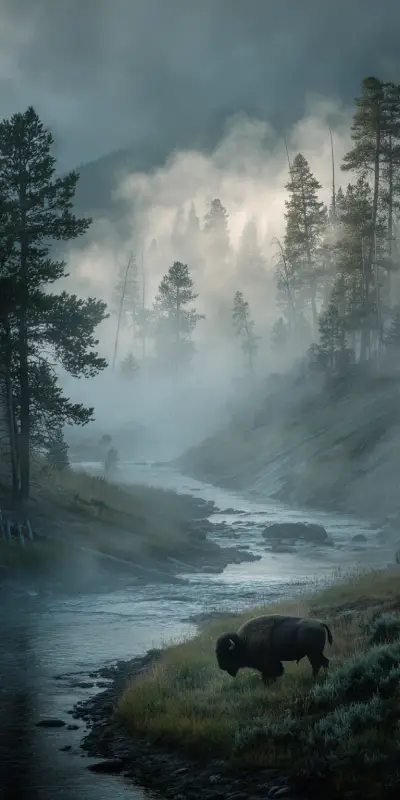
A misty landscape in Yellowstone National Park showing a bison standing near a riverbank, with fog covering the forested hills in the background and other bison grazing in the distance. The scene is moody and serene, emphasizing the wild and protected environment of the park.
AMERICAS

How Yellowstone Saved the Bison

Yellowstone. Between 1902 and 1907, the park imported 21 animals from different sources. It wasn't ideal – genetics were limited – but it was the only chance.

The captive breeding program worked. Slowly, bison numbers built up. 50 animals in 1915. 100 in 1920. 500 in 1930.

But the real revolution happened in the 1960s when Yellowstone turned around its management philosophy. Before, bison were treated like cattle – artificially fed, kept in enclosures, cut down when "surplus." The new policy was radical: let bison be wild.

No artificial feeding. No internal fences. No artificial population control. Just habitat and protection from hunting.

The bison responded. The population took off to 3,000, then 4,000 animals. Yellowstone proved something crucial: near-extinct species can bounce back if given space and protection.

Today, approximately 5,000 bison live in Yellowstone – the largest population of wild bison on continuous public lands in the United States.


🔊 Listen & Practice This Card — Bisons Near of extinction Practice shadowing: read while listening and repeat. Then write down a few expressions or sentences that stood out to you.
Speed:
0:00 / 0:00
Ready to play
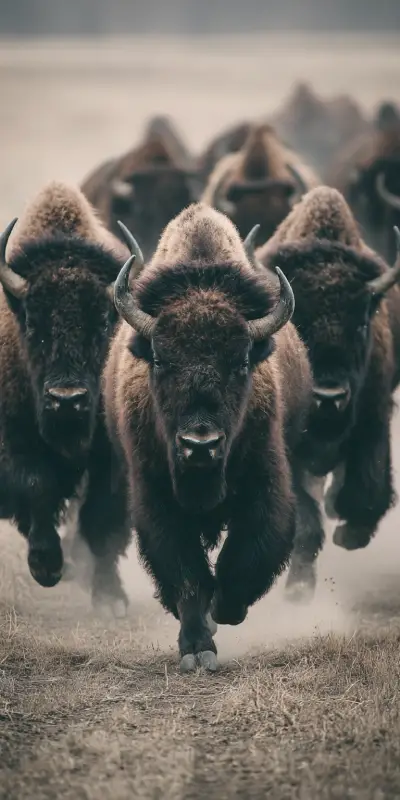
A herd of American bison run across a dry grassland with snow-covered mountains and a pine forest in the background, symbolizing wildlife resurgence in protected natural parks.
AMERICAS

The Ongoing Battle for Space

But the story doesn't have a completely happy ending.

When bison head out of Yellowstone's boundaries in winter searching for food, they run into direct conflict with ranchers. The reason? Brucellosis – a disease bison can pass on that can infect domestic cattle, causing abortions.

Montana, the neighboring state, carries out a controversial protocol: bison that cross over the park boundary can be captured and sent to slaughter. Between 2000 and 2020, more than 10,000 bison were put down this way.

Environmentalists call it "massacre." Ranchers argue they're protecting their industry. Scientists point out there's never been a documented case of bison passing on brucellosis to cattle under natural conditions.

The conflict illustrates a fundamental challenge of modern conservation: animals don't stick to human boundaries. Yellowstone can protect bison within its limits, but what about when they move around naturally?

There's still no solution. But organizations are working to set up wildlife corridors – areas where bison can migrate without conflict. It's slow, expensive, politically difficult.

And absolutely necessary if we want bison to remain truly wild.

🔊 Listen & Practice This Card — Three Parks, Three Truth Practice shadowing: read while listening and repeat. Then write down a few expressions or sentences that stood out to you.
Speed:
0:00 / 0:00
Ready to play
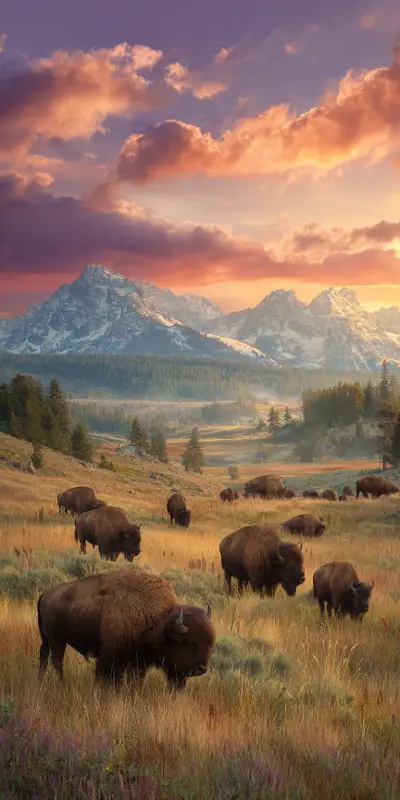
A herd of American bison roaming freely across the open plains of Yellowstone National Park at sunrise, golden light illuminating their thick fur, steam rising from their breath in the cold morning air.
CONCLUSION

Conclusion

Yellowstone's bison are living proof that extinction can be turned around.

When the park did away with artificial management and let bison be wild, the population took off. No fences. No feeding. Just space, protection, and trust in nature's ability to bounce back.

But challenges remain. Every winter, bison head out beyond park boundaries and run into conflict with ranchers. Thousands have been put down since 2000. The disease they might pass on has never actually infected cattle in the wild—yet the killing continues.

The solution? Wildlife corridors that let bison move around naturally, without crossing over into conflict zones. It's slow. It's expensive. It's necessary.

Yellowstone saved the bison from extinction. Now we must save them from our own boundaries.

Yellowstone Bison Conservation Exercise

Click on the blanks to choose the correct phrasal verb

Question 1:
Near-extinct species can _________ if given space, proving we can _________ historical mistakes.
Question 2:
When bison _________ of Yellowstone's boundaries, they _________ direct conflict with ranchers.
Question 3:
In the 1960s, Yellowstone _________ its management philosophy and let the population _________.
Question 4:
Yellowstone _________ a breeding program and bison numbers slowly _________.
Question 5:
The bison population _________ from 60 million to fewer than 1,000 as they were being systematically _________.
Question 6:
Bison that _________ the park boundary can be captured, and more than 10,000 were _________ between 2000 and 2020.
Question 7:
In 1800, bison migrations could _________ days to pass a single point, and Indigenous tribes _________ their entire culture on these animals.
Question 8:
The US government _________ mass bison slaughter, and professional hunters _________ hundreds per day.
Question 9:
Communities chose to _________ dangerous predators and organizations work to _________ wildlife corridors.
Question 10:
Without bison, Indigenous tribes couldn't _________ in the plains, and the species was _________.
Score: 0/10 questions correct (0%)

WeeklyCross teaches phrasal verbs through historical and cultural context. Each lesson connects to vocabulary practice on FlipVerbs and fluency levels on Flowglish — forming a complete learning ecosystem.

0%
Scroll to Top