Multimedia Learning Hub

🎥 Listen, watch and practise English with immersive videos, podcasts and shadowing

🎭 Phrasal Verbs Video Practice

English Story Video for Phrasal Verbs Practice
🌟 Explore All Themes
Discover story-based lessons, videos and interactive practice

🎙️ Story Podcast for Phrasal Verbs

Story Podcast for English Communication
🎯 Open the Phrasal Verbs Dictionary
Review advanced phrasal verbs with examples, meaning and practice
]
🏆

Your Progress

0
Correct
0
Incorrect
0%
Accuracy
0
Score
00:00
Study Time

🔊 Listen & Practice This Card — The Ranthambore Practice shadowing: read while listening and repeat. Then write down a few expressions or sentences that stood out to you.
Speed:
0:00 / 0:00
Ready to play
A woman holding a glass filled with the essence of nature, as if she is drinking pure life. Inside the glass, swirling green mist, tiny glowing leaves, soft floating petals, and particles of light. Her expression is serene and mesmerized. Sunlight filtering through the trees creates golden bokeh around her.
INTROD

🐅 When Predators Need Protection

You've traveled far in this trail. In Yellowstone, you saw how 23 bison came back to become 5,000. In Bangweulu, you discovered how local communities were brought in as partners to save the prehistoric shoebill.

Now we arrive at our final destination: Ranthambore National Park in India—where the most dangerous conservation challenge awaits.

How do you protect an apex predator that takes out livestock, breaks into villages, and kills about 50 people every year? How do you convince communities to get along with an animal that can kill them?

In 1970, only 20 tigers remained in Ranthambore. Extinction seemed inevitable.

Today, there are 80. This is the story of how India turned around the fate of its national symbol—and what it will take to keep that success in check.
🔊 Listen & Practice This Card — The Ranthambore Practice shadowing: read while listening and repeat. Then write down a few expressions or sentences that stood out to you.
Speed:
0:00 / 0:00
Ready to play
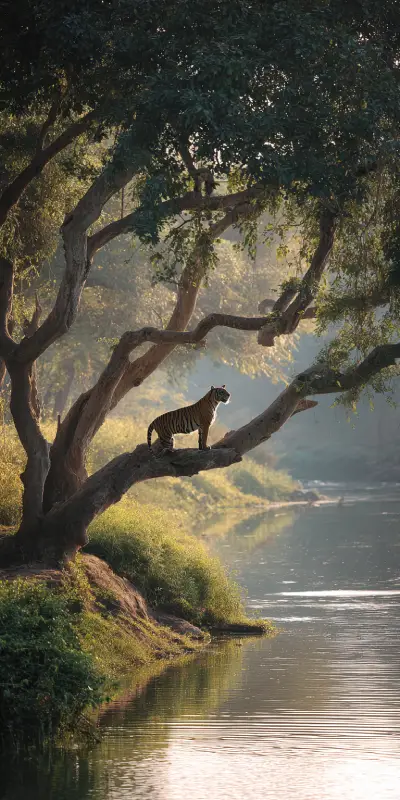
A Bengal tiger calmly walking through a dry forest landscape in Ranthambore National Park, India. The scene captures coexistence and conservation: ancient stone ruins partially visible in the background, sparse trees, golden afternoon light filtering through dust in the air.
CARD 2

🌏 The Ranthambore Tigers — 🐅 Dangerous Beauty: Why Tigers Matter

Tigers are the largest felines on the planet. Supreme hunters. Apex predators that keep in check entire ecosystems. In India, they're also national symbols, almost mythical creatures celebrated in art, literature, and religion for millennia.

But why does saving tigers specifically matter?

Ecologically, tigers are a "keystone species." They hold down populations of large herbivores like deer and wild boar. Without tigers, these populations blow up, devastate vegetation, wipe out habitats of smaller species. A single tiger affects hundreds of other species through the trophic cascade.

Economically, tigers bring in massive tourism. Ranthambore receives 500,000 visitors annually, pumping millions of dollars into the local economy. Hotels, guides, transportation – an entire industry builds on tigers.

Culturally, losing tigers would mean losing part of Indian identity. It would be like England losing its castles or Egypt losing the pyramids.

But tigers are also dangerous. They take out people – about 50 deaths annually in India. They kill livestock. They break into villages. Human-tiger conflict is real and lethal.

In 1970, only 1,800 tigers remained in all of India. Extinction seemed inevitable.

Ranthambore had 20 tigers. Twenty animals to save an entire species.

🔊 Listen & Practice This Card — Machli's Legacy Practice shadowing: read while listening and repeat. Then write down a few expressions or sentences that stood out to you.
Speed:
0:00 / 0:00
Ready to play
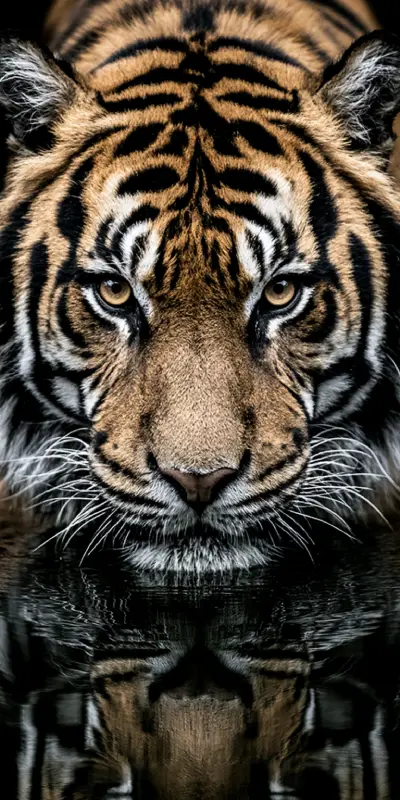
A photograph of a tiger in the wild, drinking water, its intense amber eyes staring directly at the camera, with its face reflected on the still surface of the water.
CARD 3

🐅 Machli's Legacy: A Story of Survival

Machli – meaning "fish" in Hindi – was born in Ranthambore in 1997. She would turn into the world's most famous tigress.

Why? Because Machli proved that tigers can get along with humans.

For 20 years, Machli lived primarily in Ranthambore's tourist zone. She was photographed millions of times. Filmed by international documentarians. Observed by hundreds of thousands of tourists. And she never went after a human.

She took down livestock occasionally – tigers are opportunistic. But she never saw humans as prey. This crucial distinction allowed people and tigers to share space.

Machli had 11 cubs throughout her life. Many survived to adulthood – remarkable survival rates. Her descendants now make up Ranthambore and adjacent parks' populations. Genetically, perhaps 25% of the region's tigers carry on her genes.

When Machli passed away in 2016 at age 19 (exceptional for wild tigers), millions of Indians mourned. The government put out postage stamps in her honor. Documentaries celebrated her life.

But Machli's real legacy wasn't fame. It was proving that conservation can work even in one of the planet's most densely populated regions.

If tigers can hold on near 1.4 billion people in India, they can survive anywhere.


🔊 Listen & Practice This Card — Ranthambore's Triumph Practice shadowing: read while listening and repeat. Then write down a few expressions or sentences that stood out to you.
Speed:
0:00 / 0:00
Ready to play
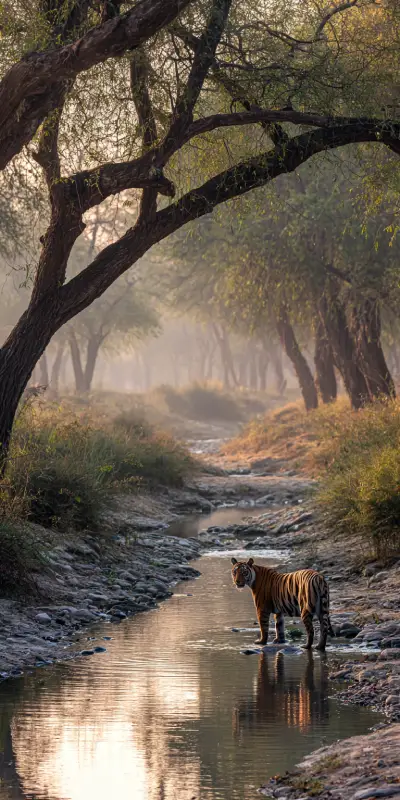
Tiger in Ranthambore's tourist zone at sunrise, shimmering golden light spilling across gently flowing crystal-clear waters.
CARD 4

🐅 From 20 to 80: Ranthambore's Triumph

In 1973, Ranthambore had 20 tigers and an uncertain future. Today it has approximately 80 tigers – the highest tiger density of any park in India.

How did this happen?

First, the Indian government completely did away with tiger hunting in 1972. No exceptions, no special licenses. Zero hunting.

Second, Ranthambore carried out "voluntary relocation" of villages within the park. Families received financial compensation, agricultural land outside the park, and new houses. Not everyone went along with it – and those who wanted to stay could. But many chose to leave, cutting down conflicts.

Third, the park set up buffer zones – areas around the core where some human activity is permitted but regulated. This gave tigers space to spread out without running into densely populated areas directly.

Fourth, Ranthambore put millions into conflict mitigation. If a tiger takes out livestock, the owner receives compensation within 48 hours. If a tiger shows up in a village, specialized teams capture and relocate it. No retaliation is permitted.

The result? The tiger population shot up fivefold in 50 years.

But Ranthambore now faces up to a new problem: overpopulation. 80 tigers in 1,400 km² means territories overlap. Young tigers can't pick out space. Conflicts increase.

The solution? Wildlife corridors linking up Ranthambore to other parks, allowing tigers to move around naturally and fill up areas where they were extinct.

It's complex. It's expensive. It's politically challenging.

But it's the only way to ensure Ranthambore's success is sustainable long-term.

🔊 Listen & Practice This Card — Three Parks, Three Truth Practice shadowing: read while listening and repeat. Then write down a few expressions or sentences that stood out to you.
Speed:
0:00 / 0:00
Ready to play
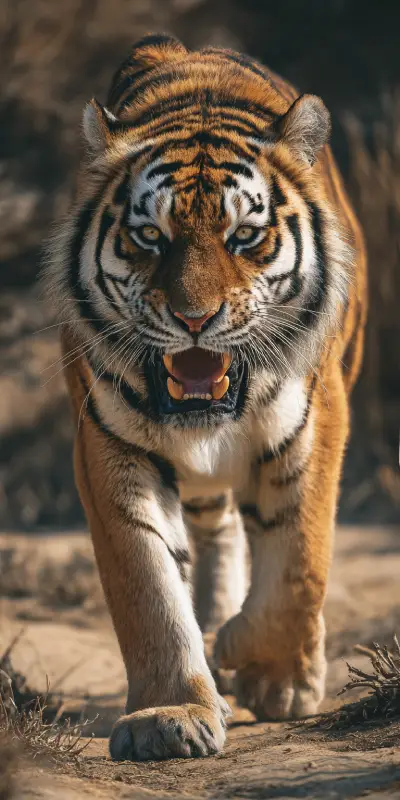
A photograph of a tiger in the wild, walking towards the viewer.
CONCLUSION

🐅 Conclusion: Ranthambore's Legacy

From 20 tigers to 80 in fifty years. Ranthambore pulled through against all odds.

The formula? India did away with hunting completely. The park carried out voluntary relocations. Specialized teams were set up to handle conflicts. Farmers who lost livestock were compensated within 48 hours—no retaliation allowed.

And then there was Machli. The tigress who proved tigers can get along with humans. Her genes carry on in 25% of the region's tigers today.

But success brings new challenges. With 80 tigers in 1,400 km², young tigers can't pick out their own territory. The solution? Wildlife corridors linking up Ranthambore to other parks, letting tigers move around and fill up areas where they once roamed.

Conservation is never finished. It evolves—just like the species we protect.

Ranthambore Tiger Conservation Quiz
Read carefully and choose the best answer
Question 1/10
Score: 0/10
What does 'keep in check' mean in: 'Supreme hunters that keep in check entire ecosystems'?
0/10
Well done!

WeeklyCross teaches phrasal verbs through historical and cultural context. Each lesson connects to vocabulary practice on FlipVerbs and fluency levels on Flowglish — forming a complete learning ecosystem.

0%
Scroll to Top